Screen Guardians Podcast 41 — Crossing the Bridge to Social Media, with Krista Boan
“Everyone has it. I’m the only one who doesn’t.” If you’ve heard that sentence at your kitchen table, you already know how hard this season is. We spend so much energy asking when kids should get an account that we rarely stop to ask the bigger question: how do we know a child is actually ready for social media?
That’s the conversation I wanted to have with Krista Boan. Krista is the co-founder of Screen Sanity, a former educator, and a mom of four. She has spent years helping families move past fear and frustration and toward practical conversations, boundaries, and connection with their kids.
Now she’s taking that work straight to girls and their moms with her new book, Tidbits of Truth About Social Media and You: A Guidebook for Girls.
What I love about Krista’s approach is that it isn’t simply “stay off social media.” It’s about helping kids understand why we wait, what they need to know before they enter these spaces, and how we prepare them to walk in with confidence and wisdom.
Listen to the full episode below, or find it on Spotify and on The Screen Guardians Podcast page.
Table of Contents
Waiting doesn’t have to mean doing nothing.
Why “when” isn’t the only question
Most of the debate about kids and social media centers on a number. Thirteen? Sixteen? After high school? Those are fair questions, and we’ve written about what age a kid should get social media. But a birthday doesn’t tell you much about whether a child is ready for social media and prepared for what’s waiting on the other side of the download button.
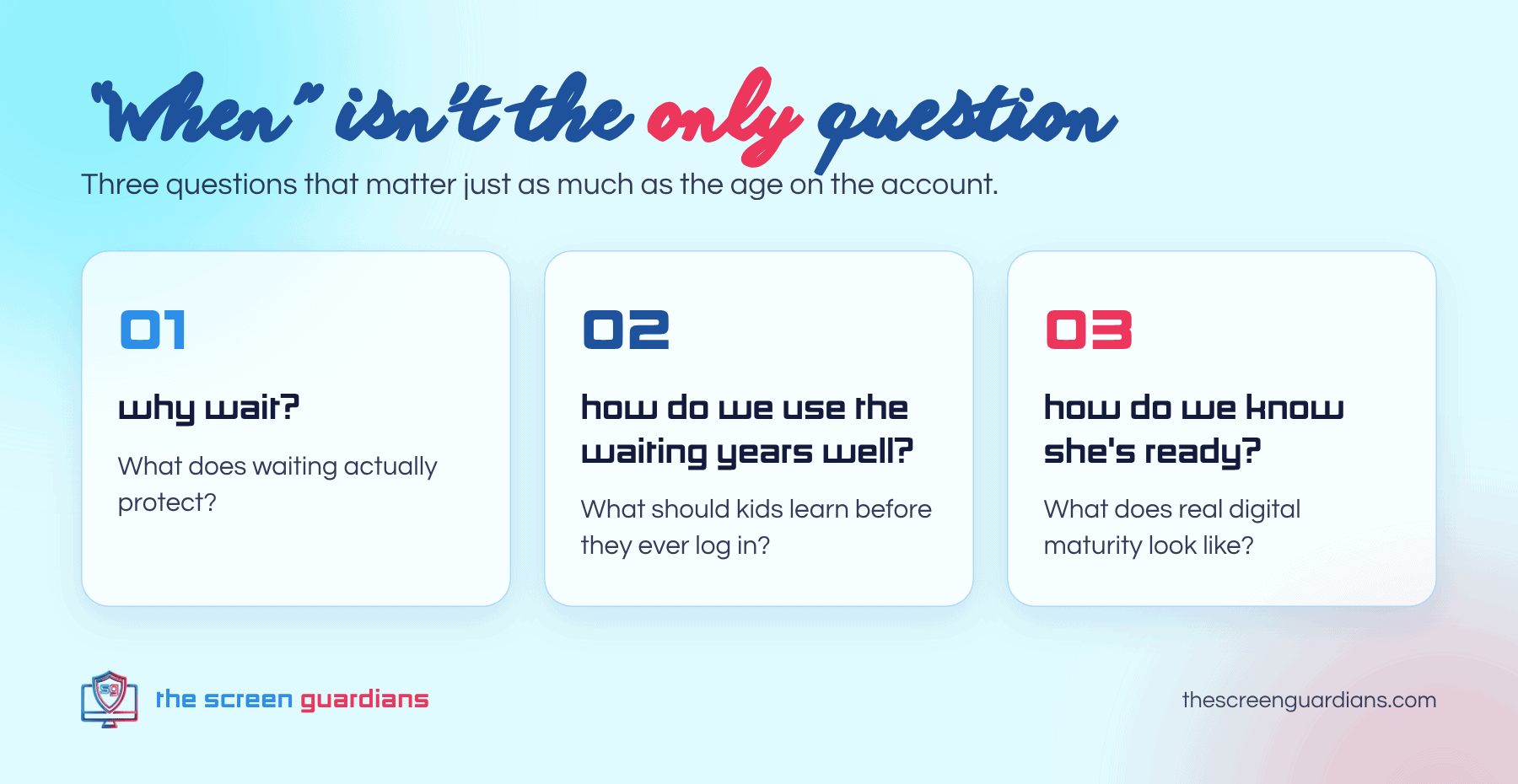
This episode asks three questions that matter just as much:
- Why wait? What does waiting actually protect?
- How do we use the waiting years well? What should kids be learning before they ever log in?
- How do we know when she’s ready? What does real digital maturity look like?
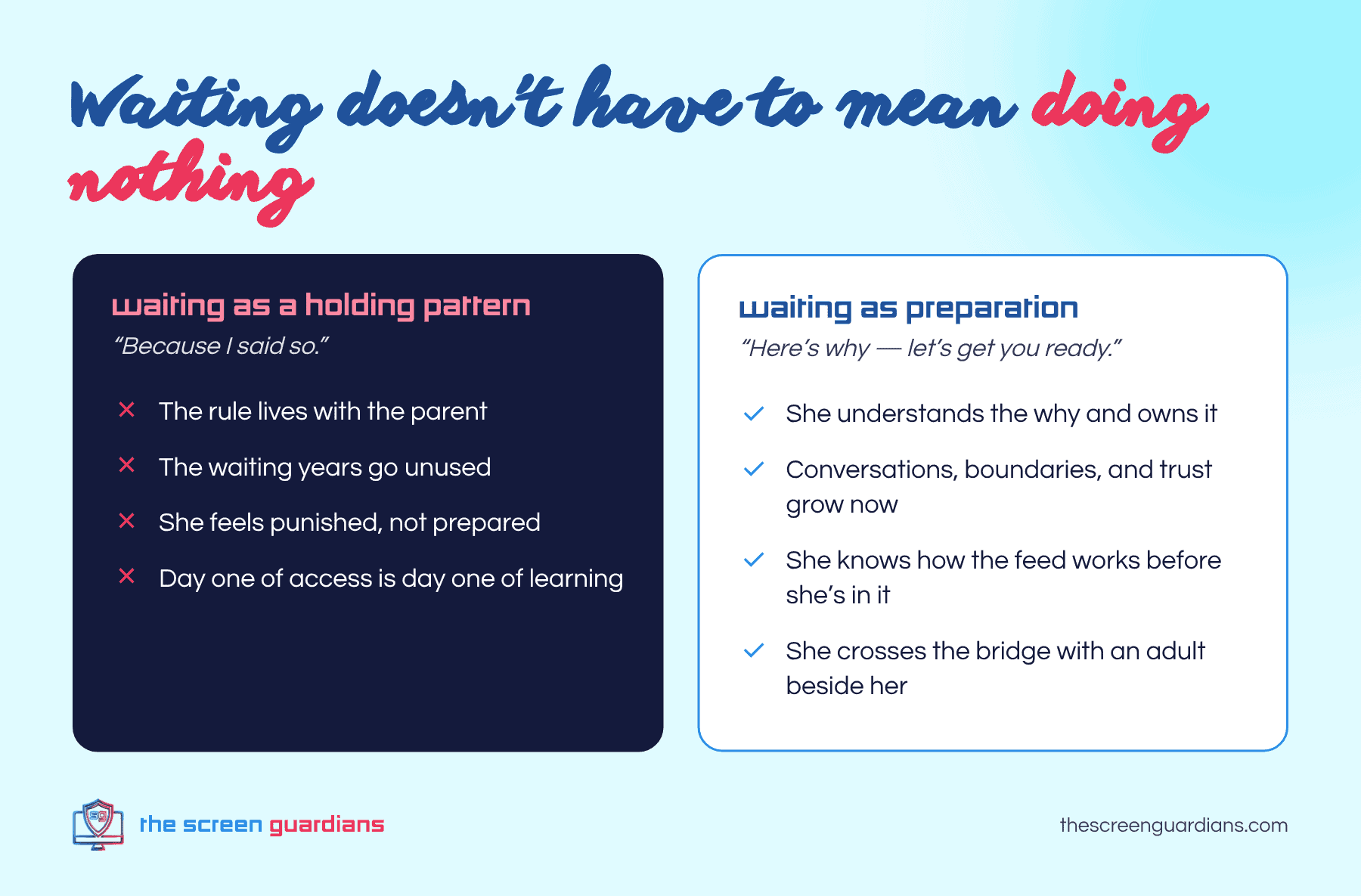
Here’s the reframe that shapes everything else: the years before social media aren’t a holding pattern. They can be some of the most important years for teaching, talking, and building trust.
Crossing the bridge to the social media years
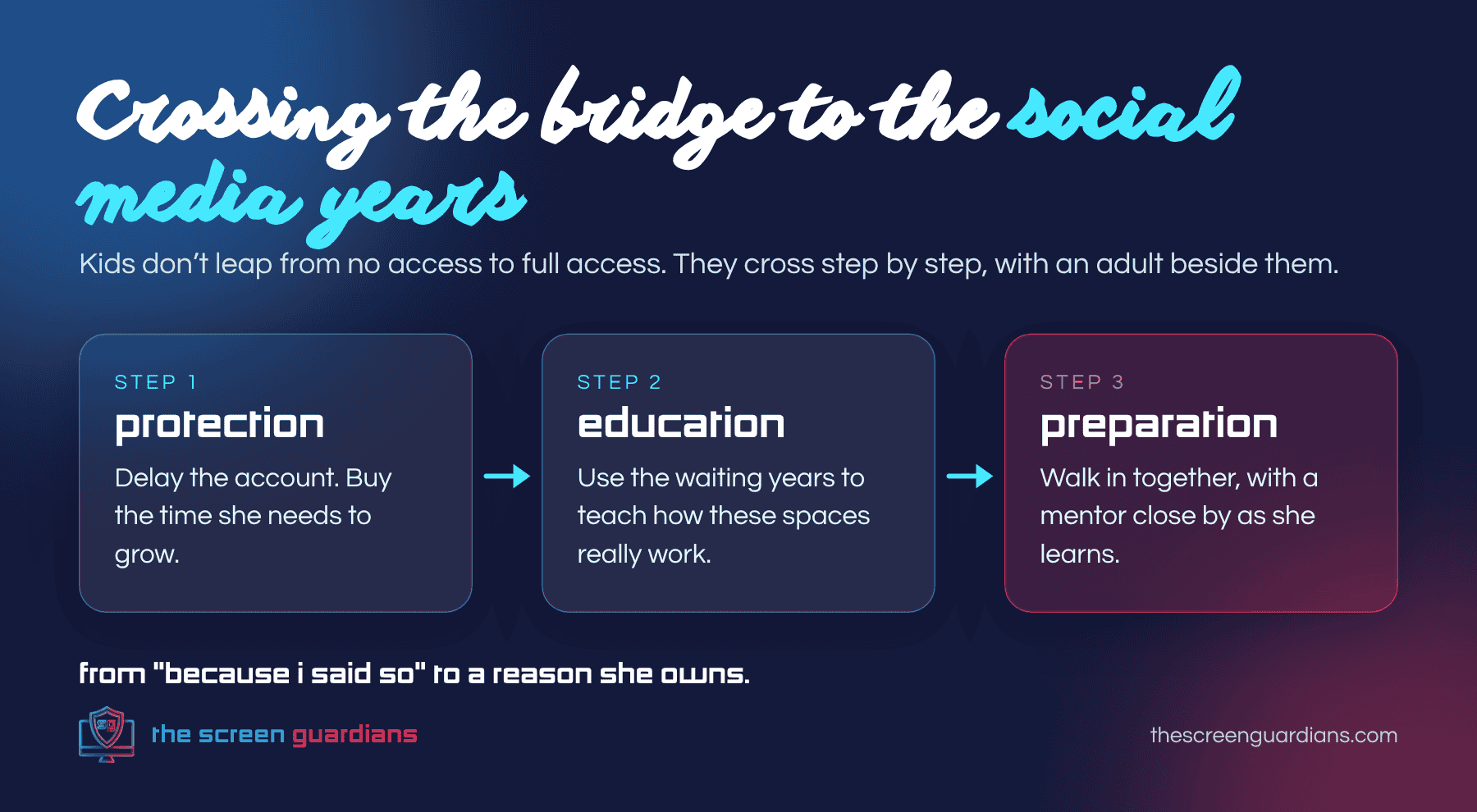
Krista describes this season as a bridge. Nobody becomes ready for social media overnight. Kids don’t leap from no access to full access in one step. They cross step by step, with an adult walking beside them.
In real families, delaying social media is hard. Kids watch their friends get accounts. Group chats form without them. And sooner or later, your daughter asks, “Why do I have to wait?”
“Because I said so” might hold for a while. It won’t hold forever. The goal is to move from a rule she follows to a reason she owns. When a child understands the why, waiting stops feeling like a punishment and starts feeling like preparation for the day she’s truly ready for social media.
Why a guidebook for girls, and why now
There are risks online for every child. But some parts of social media hit girls differently: the comparison, the appearance-based feedback, the pressure to perform friendship in public.
The middle-school window makes it more complicated. Identity and self-worth are still forming, and the U.S. Surgeon General’s advisory on social media and youth mental health put it plainly: we cannot yet conclude that social media is sufficiently safe for children and adolescents. That’s exactly the moment many girls are handed a feed built to measure them.
Krista wrote her book as something moms and daughters can work through together. That relationship piece matters. A guidebook read side by side opens conversations that a lecture never will, and it helps a girl think through what being ready for social media actually means.
Krista told me her heart is for the girls who already sense something is off and want someone to explain why. Her posture is a mentor’s, not a warden’s:
“Let me take your hand rather than slapping your wrist, right? And show you the path of things that could be harmful for you.”
Krista Boan
“Everyone else has it”: protecting her without isolating her
This is where so many parents start second-guessing themselves. Am I protecting her, or am I socially isolating her?
It’s a real tension. Everything in adolescence tells kids they desperately need to belong. Being the only one without an account can feel enormous to a 12-year-old.
Krista was honest that this pressure doesn’t only come from friends. It comes from team apps, church groups, and extracurriculars. In many communities, kids don’t even swap phone numbers anymore. If you don’t have Snapchat, you miss the invite to get ice cream after the game.
“For those families like mine who are choosing to delay, there’s just a real cost of loneliness and rejection that we’re asking our children to go through. And so it’s really critical that we step into their reality and have empathy for their situation.”
Krista Boan
Krista and I talked about how to help kids tolerate being different, and what to say to the girl who feels like she’s the only one waiting. If that’s your daughter, she’s not alone. And neither are you. More families are making this choice than it looks like from the outside.
Real connection is a tennis match
One of my favorite moments in this episode was Krista’s picture of what connection really is. From the time we’re babies, we’re looking for a face that responds to us. We share something, someone answers, and back and forth it goes. Krista calls it a tennis match.
Social media promises that same back-and-forth. But Krista described it as stepping onto a court with a three-story net in the middle. You post, you wait, and maybe nothing comes back, or something hurtful does, in front of hundreds of people instead of one.
That’s a lie worth naming for our kids before they’re ready for social media: the feed feels like connection, but it rarely gives them what they actually came for. Krista’s practical tip for families is to help kids notice which apps run on advertising. Apps that let you talk face to face, without ads, tend to look a lot more like the tennis match.
How to know if your child is ready for social media
One of the most useful parts of this conversation is the difference between a child’s age and a child’s readiness. We confuse the two all the time. Two 13-year-olds can be in completely different places.
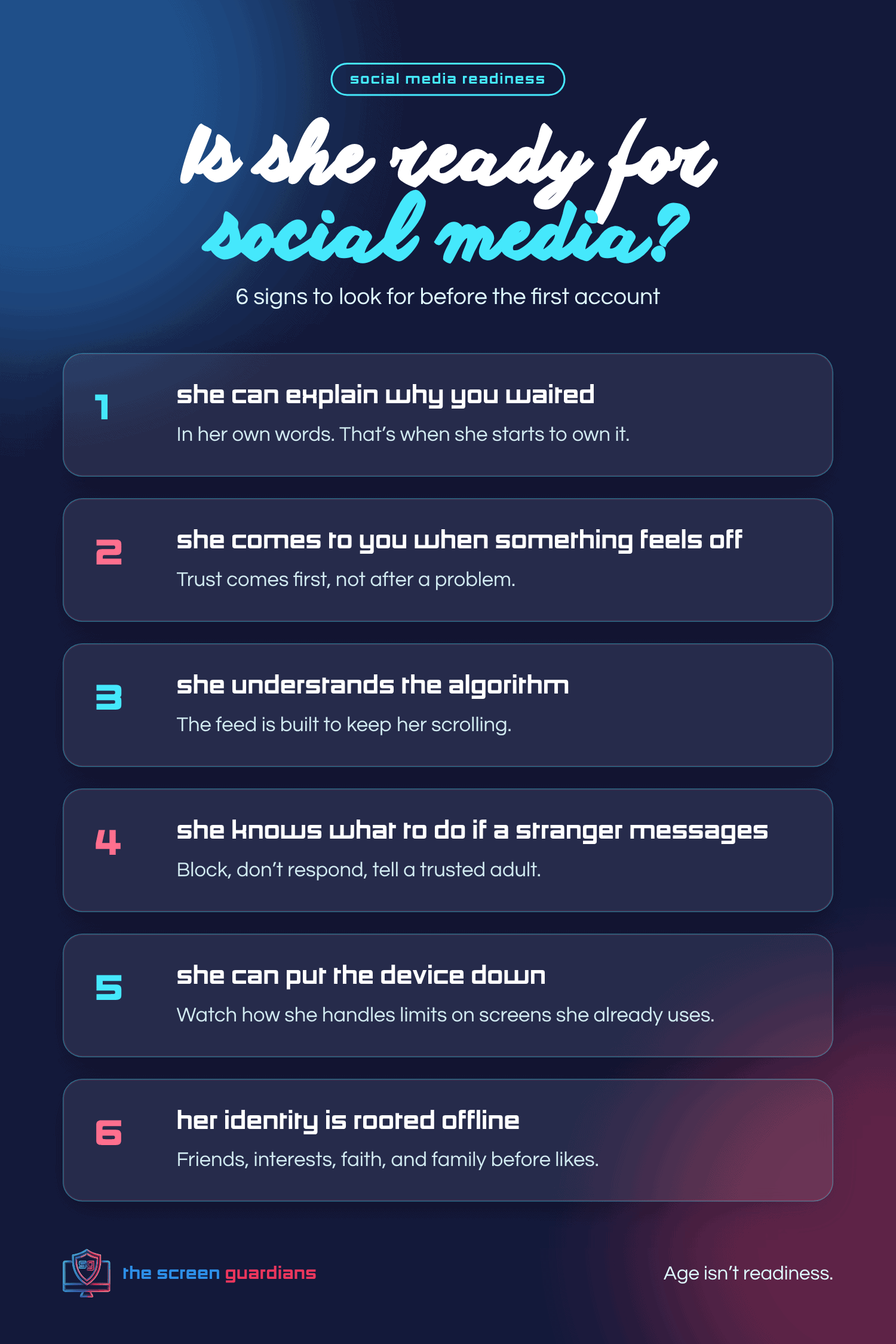
Before saying yes to a first account, here are a few questions worth asking:
When I asked Krista what would be on her own readiness checklist, she named things like plugging the phone in at the charging station without being hounded, being able to come off a screen without a meltdown, and being willing to bring a problem to you instead of hiding it. She also reframed content filters: they aren’t a sign you don’t trust your kid. They’re a seatbelt.
- Can she explain why you waited? If she can put the reasons in her own words, she’s starting to own them.
- Does she come to you when something online feels off? Trust has to be in place before the first account, not built after a problem.
- Does she understand the algorithm? She should know the feed is designed to keep her scrolling, and that what she sees isn’t the whole picture.
- Does she know what to do if a stranger messages her? Block, don’t respond, tell a trusted adult. No shame, no punishment for telling.
- Can she put the device down? Look at how she handles limits on the screens she already uses.
- Is her sense of who she is rooted offline? Friends, interests, faith, and family should be shaping her identity before likes and followers do.
Once she crosses the bridge: mentorship, not surveillance
Saying yes isn’t the finish line. It’s where mentorship begins. We can’t supervise every click our kids will ever make, but we can stay close, keep asking questions, and loosen the reins as they show us they’re ready for more.
Krista’s own daughter waited until 16. A month before her birthday, she hit a wall. So Krista offered to pay her to hold out a little longer. Then her daughter asked if she could keep going another month. Over time, she started to decide for herself that she didn’t want to be on it. That’s what we’re after: a reason she owns.
Identity before the algorithm
What happens when a girl starts figuring out who she is in an environment that hands her constant feedback in likes, comments, views, and followers?
That’s why a strong sense of identity before social media matters so much. For families of faith, we also talked about helping daughters understand that their worth isn’t something an algorithm, a follower count, or anyone else’s opinion gets to decide.
Krista put it this way. If there were a driver’s ed test for social media, there would be just one question: Do you know who you are?
If you’re worried about what that pull looks like once kids are already in, our post on social media addiction in kids walks through the brain science behind it.
Parents and schools: one language for kids
Something I see constantly through The Screen Guardians: parents, teachers, and schools are worried about the exact same kids, but they’re working in separate lanes.
Krista and I talked about the cultural reset we’re watching right now, with schools rethinking phones and parents realizing, “Actually, we can make a different choice.” That shift gives me so much hope.
But restriction is a pause button. Education is the solution. Every child needs digital literacy, digital health, and online safety education before they’re handed the keys to the digital world. No child is ready for social media without it. When school and home use the same language, kids stop getting mixed messages and are far more likely to come to an adult when something goes wrong.
It’s the same thread from our last episode on the Your Attention Please documentary: kids are up against products designed by people who studied their brains. They deserve to understand how those products work before they’re asked to manage them.
If she already has social media
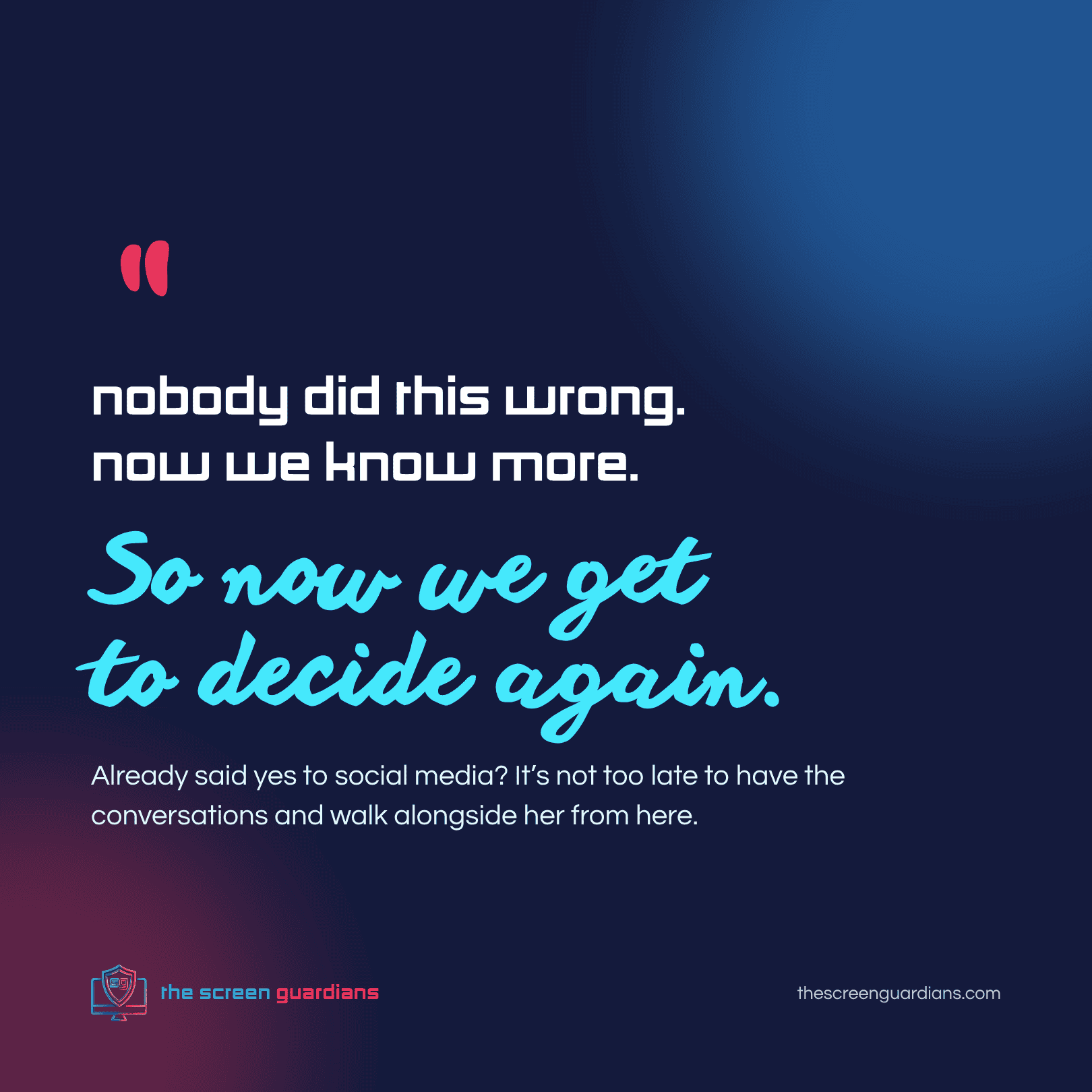
Maybe you’re reading this and thinking, “Well, I missed my opportunity.” You didn’t. Nobody did this wrong. We were making the best decisions we could with the information we had.
Now we know more, so now we get to decide again. You can still have the conversations, set new boundaries together, and walk alongside her from here. Being ready for social media is a skill she can keep building, even after the account exists.
One thing you can do tonight
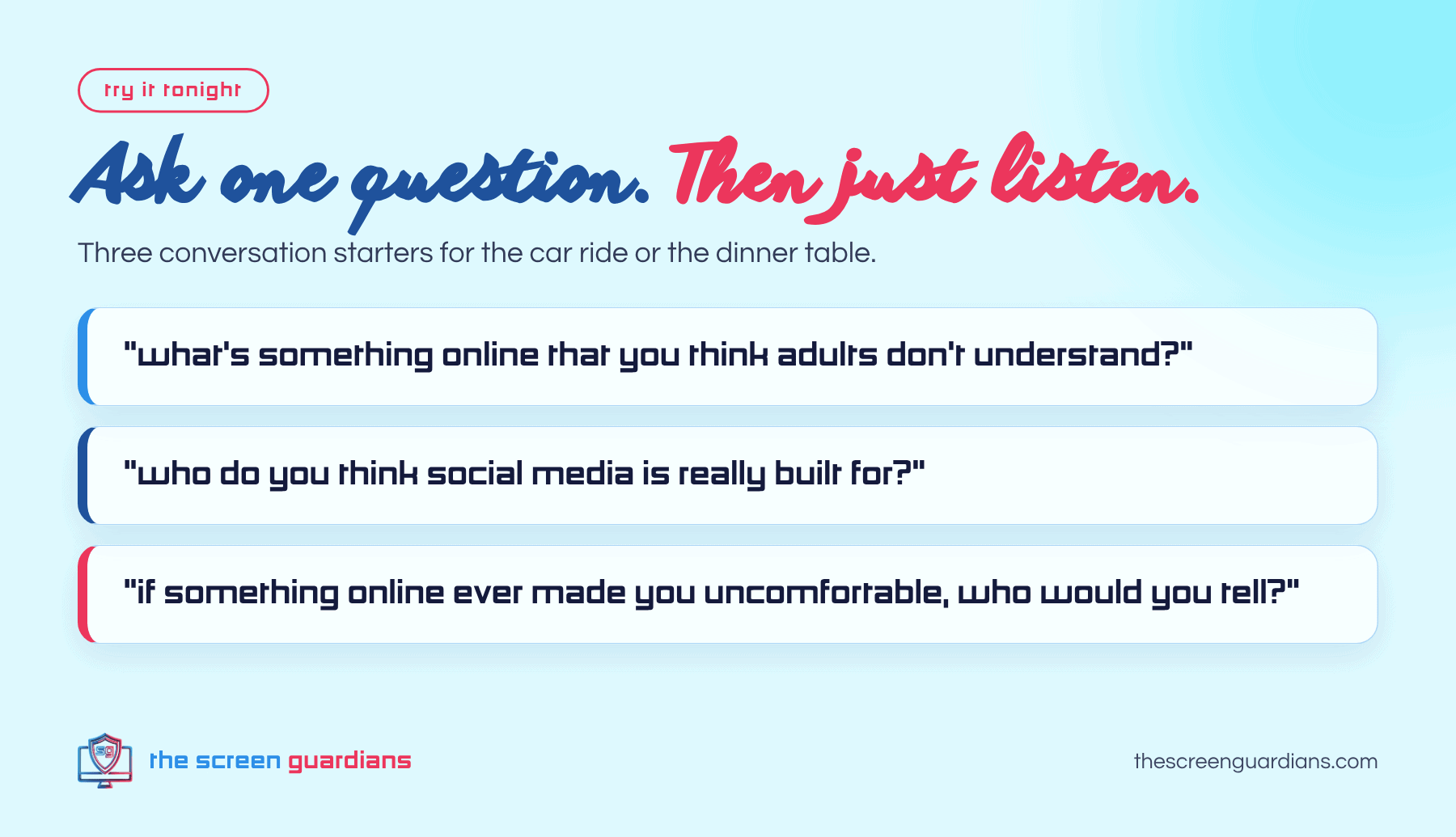
Not six months from now. Tonight. Ask your child one open question about the online world, and then just listen:
- “What’s something online that you think adults don’t understand?”
- “Who do you think social media is really built for?”
- “If something online ever made you uncomfortable, who would you tell?”
Waiting isn’t about keeping kids away from technology forever. It’s about giving them the time, knowledge, and support to enter these spaces with wisdom and confidence, so that when she is ready for social media, she knows who she is.
Krista’s parting words were for the parent who feels behind:
“You’re created to be the exact person in your child’s life that your child needs.”
Krista Boan
Know your why. Stay in the passenger seat. The world is big and screens are small, and this season won’t last forever.
Frequently asked questions
How do I know if my child is ready for social media?
Look past age to readiness. A child who is ready for social media can explain why your family waited, comes to you when something feels off, understands how the algorithm works, and has a strong sense of identity offline is far better prepared than one who simply hit a birthday.
What age should my daughter get social media?
There’s no magic number, and kids mature at different rates. Many experts encourage waiting at least through the middle-school years. Whatever age you choose, use the waiting years to teach the skills she’ll need once she’s online.
What do I say when she says everyone else has it?
Acknowledge how hard it feels to be different. Then explain your reasons and invite her into them, instead of leaning on “because I said so.” Remind her she isn’t the only one waiting, even if it feels that way.
Is it too late if my child already has social media?
No. You can still talk about how the platforms work, set new boundaries together, and stay involved as a mentor. Starting where you are is always better than not starting at all.
Where can I find Krista Boan’s book?
Tidbits of Truth About Social Media and You: A Guidebook for Girls is available on Amazon. You can also follow Krista and The Road to Social at @the.road.to.social or visit roadtosocial.com.
If you’re ready to learn more
Krista’s new book, Tidbits of Truth About Social Media and You: A Guidebook for Girls, is available on Amazon. Follow Krista and The Road to Social on Instagram and Facebook at @the.road.to.social, or visit roadtosocial.com.
Want this conversation in your school? The Screen Guardians is a K–12 digital health and safety program that teaches students, teachers, and parents together. See how The Screen Guardians works.
Want to go deeper at home? The Parent Portal is a calm, judgment-free place to find tools for the hard moments.
Education is the greatest form of protection.