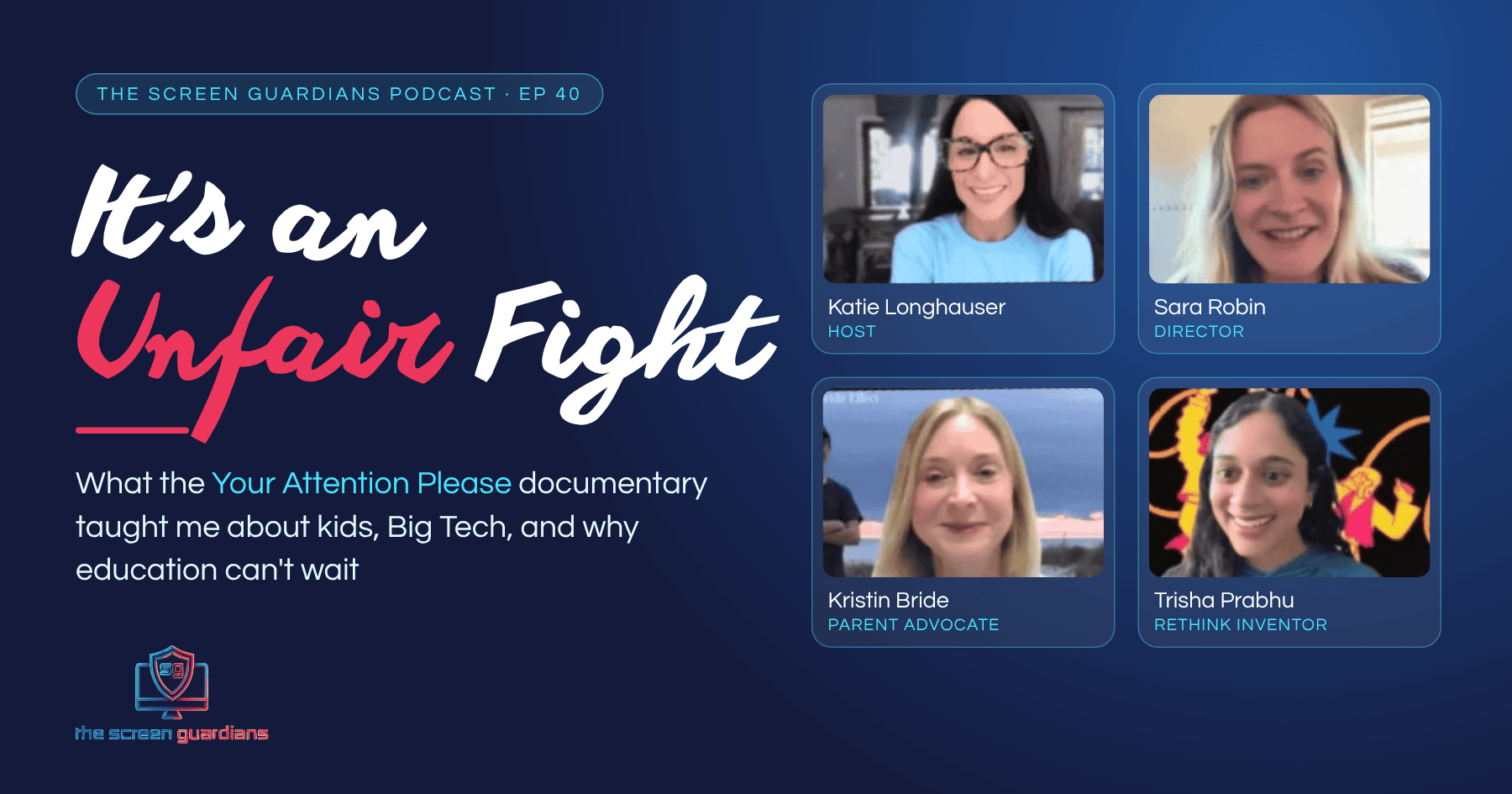
Screen Guardians Podcast 40 — It’s an Unfair Fight, with Sara Robin, Kristin Bride, and Trisha Prabhu
I watched the Your Attention Please documentary over a weekend, and when it ended I had to sit for a minute.
It’s a heavy film. It follows the families, young people, and advocates living with the consequences of technology designed to capture our attention. Then I got to sit down with three of the people at the center of it: director Sara Robin, parent advocate Kristin Bride, and ReThink inventor Trisha Prabhu.
I left that conversation more convinced than ever of why I do this work.
Table of Contents
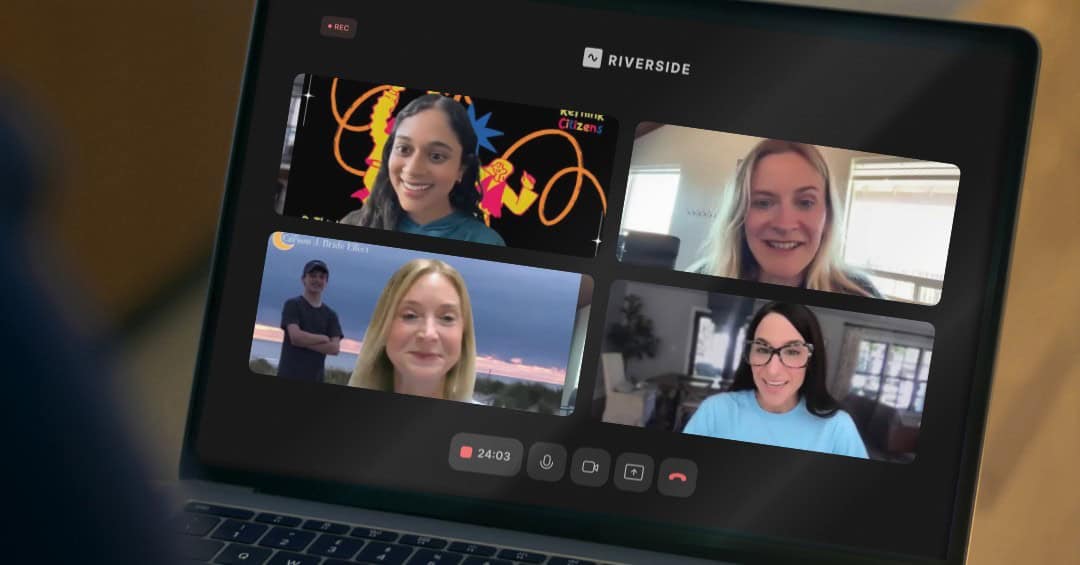
We are all in this
Kristin lost her son Carson to suicide after he was cyberbullied online. She has spent the years since fighting for safer platforms, and she said something every parent needs to hear: this is an unfair fight.
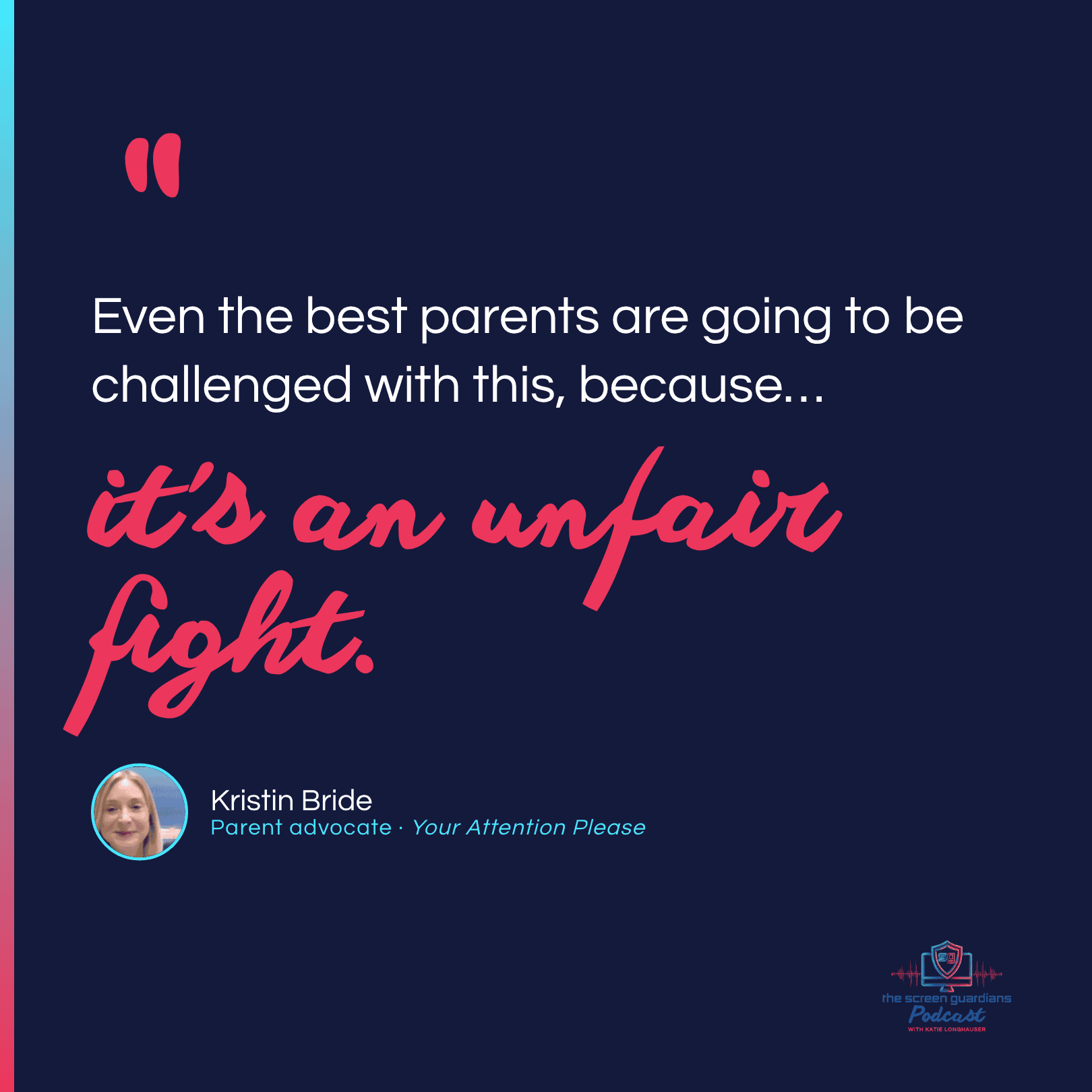
“Even the best parents are going to be challenged with this, because it’s an unfair fight when you look at what’s gone into the design behind the products.” — Kristin Bride
These products are built by some of the smartest people in the world to hold our attention as long as possible. That’s the business model. So if screens feel like a daily struggle in your house, it doesn’t mean you’re failing.
And it isn’t only our kids. Sara made the Your Attention Please documentary after realizing she couldn’t put her own phone down. She had been criticizing social media for a decade, and it still got her. She lost the ability to read a book for fun. The attention economy, the addictive design, and the profit behind it are things every one of us is facing.
No shame. No judgment. We’re navigating this together.
What one 13-year-old showed us about the pause
When Trisha was 13, she read about a girl who died by suicide after being cyberbullied. She decided she couldn’t be a bystander.
So she built ReThink, a tool that catches hurtful words before they’re posted and asks a simple question: are you sure?
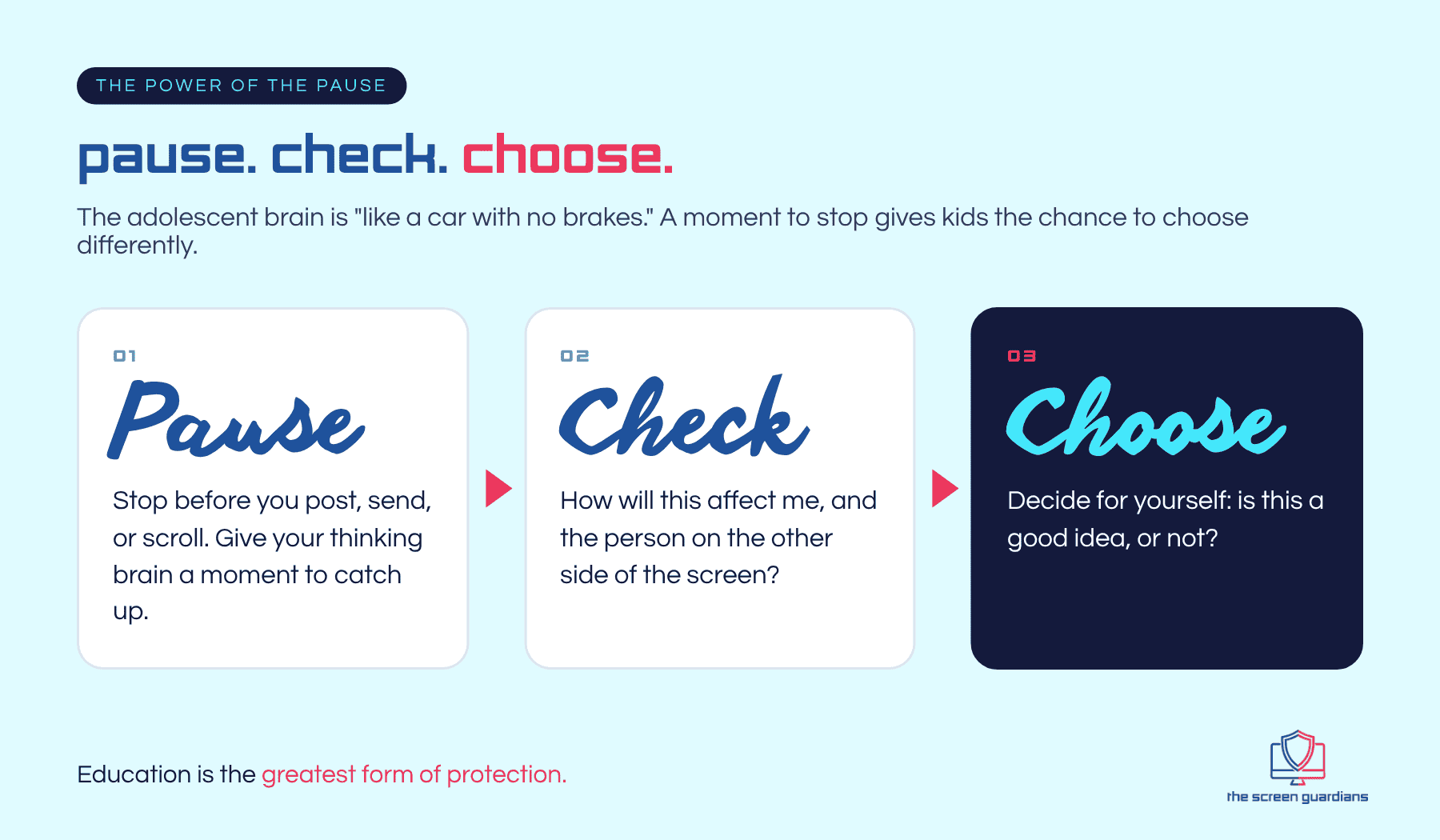
That pause is the whole idea. The adolescent brain, as Trisha put it, is “like a car with no brakes.” The part that thinks through consequences is still under construction. A moment to stop and reconsider gives kids the chance to choose differently, and many do.
It’s the same principle behind what we teach at The Screen Guardians: Pause. Check. Choose.
Trisha’s tool is now used around the world, and it’s still free on the App Store, Google Play, and as a Chrome extension. To me it’s proof that when you help someone understand what’s happening and give them a moment to think, they often make a better choice. That’s the power of education.
Trisha also said something that stuck with me. She wasn’t a genius kid. She was a 13-year-old who saw a problem. If she could come up with the pause, the platforms could have done far more, far sooner.
Why we can’t wait for the Kids Online Safety Act
Policy matters, and so does platform design. Kristin and others are doing brave work to change both.
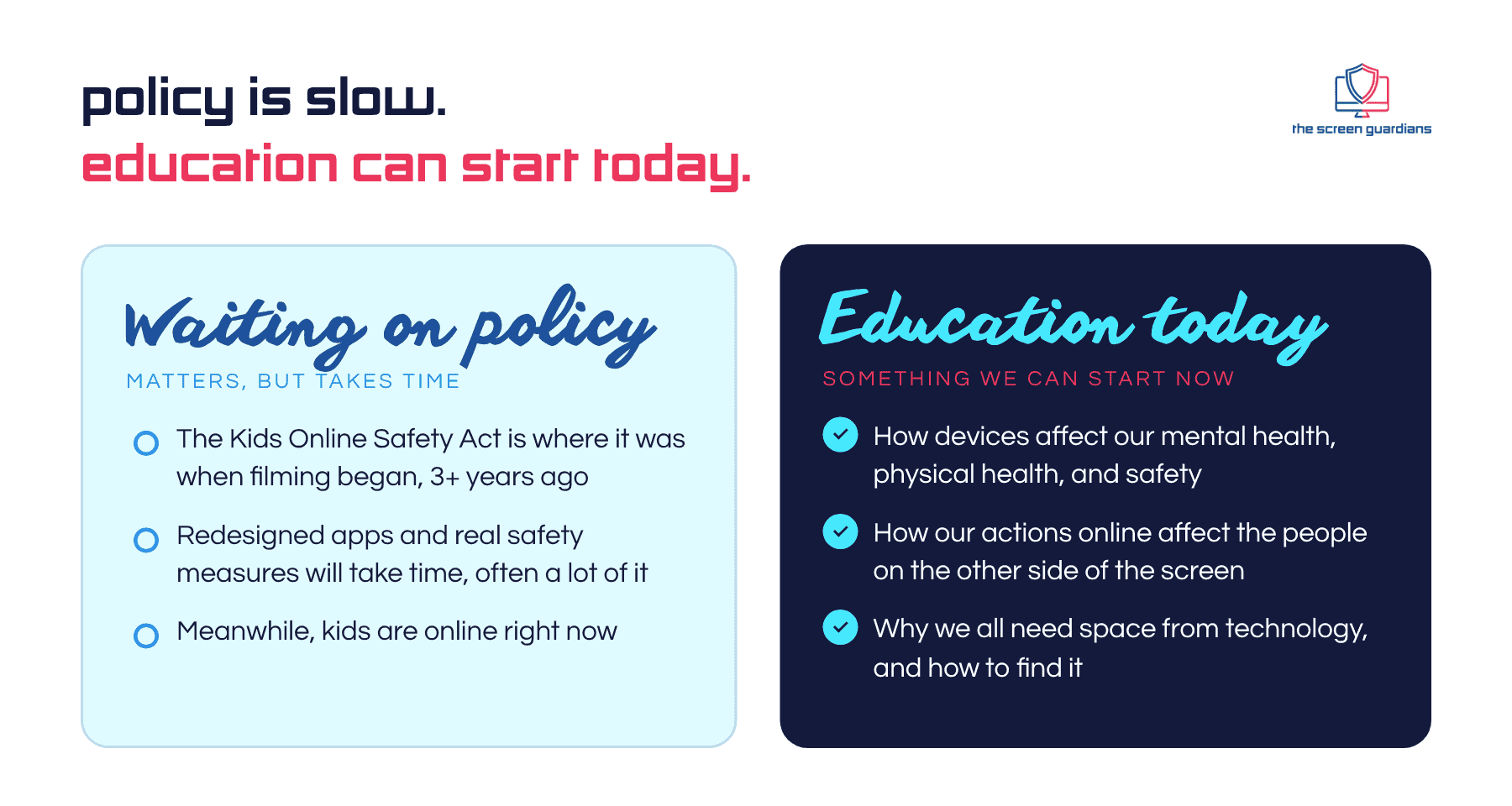
But policy is slow. The Kids Online Safety Act is in the same place it was when filming began more than three years ago. Redesigned apps and real safety measures will take time. Often a lot of time.
Our kids and families are far too valuable to sit and wait.
Education is something we can start today. We can teach kids and adults how these devices and platforms affect our mental health, our physical health, and our safety. We can teach how our actions online affect us and the people on the other side of the screen. And we can help families understand why we all need space from technology, and how to find it.
What Kristin wants every parent to know
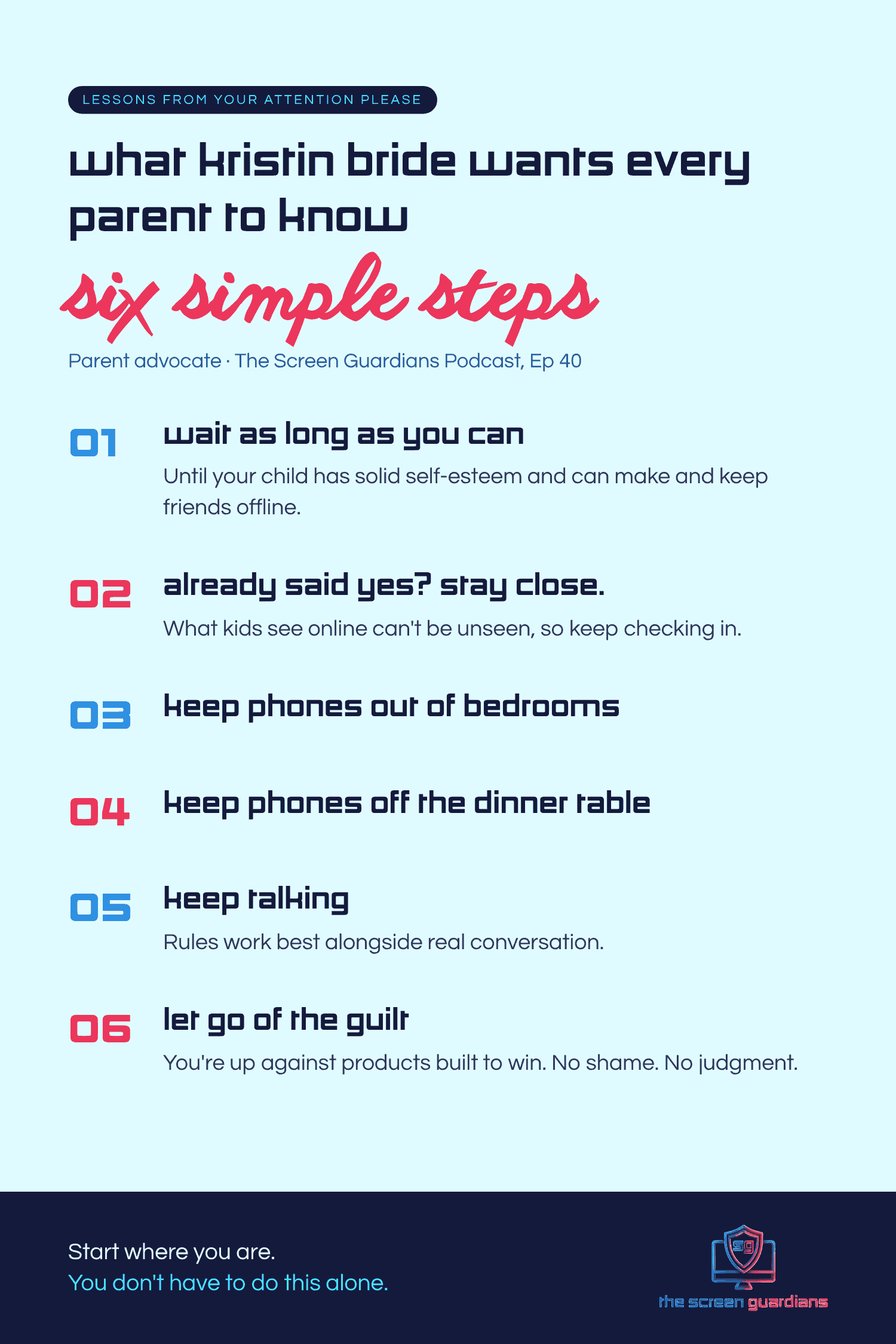
Kristin says she has never met a parent who wished they’d given their child social media earlier. Her advice from our conversation:
- Wait as long as you can. Hold off until your child has solid self-esteem and can make and keep friends offline.
- If you’ve already said yes, stay close. What kids see online can’t be unseen, so keep checking in.
- Keep phones out of bedrooms.
- Keep phones off the dinner table.
- Keep talking. Rules work best alongside real conversation.
- Let go of the guilt. You’re up against products built to win.
A daily practice
Technology is not bad. I’ll keep saying it. But it does need guardrails, especially for young people, and it needs education alongside them.
It’s also not something you fix once. It’s a daily practice, for me as much as anyone.
What I want for our kids is empathy, compassion, knowledge, and then the free will to decide for themselves. The order matters. Education comes first, and so does protection for those who can’t yet protect themselves.
What the Your Attention Please documentary means for schools
Kristin named one of the things that gives her the most hope: phone-free schools. When they’re done bell to bell, kids get six hours to focus on learning and on each other. That work matters.
But the school day ends. Kids go home, and the devices turn on. That’s why at The Screen Guardians we teach students, we teach teachers, and we teach parents, so everyone is on the same page. It’s like a three-legged stool. Students learn how technology affects the brain, their mental, physical, and emotional health, digital safety, algorithms, and persuasive design, in one short lesson a week taught by their own teachers. A Parent Companion carries the same language home.
Restriction is a pause button. Education is the solution.
Thank you
To Sara, Kristin, Trisha, and the whole team behind the Your Attention Please documentary: thank you for taking on this topic and for being brave enough to share your stories. They matter.
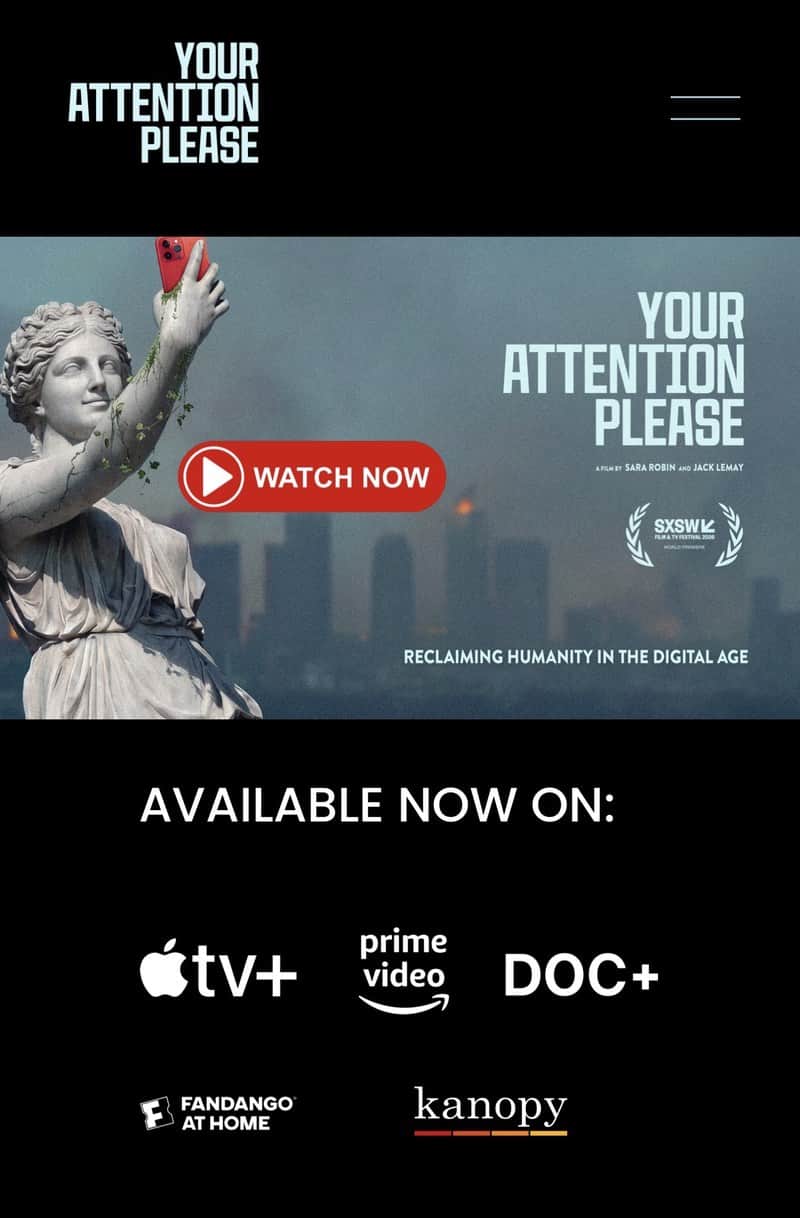
Watch the Your Attention Please documentary at yourattentionplz.com, then talk about it with the people you love. It’s available now on Apple TV, Prime Video, and other platforms.
Listen to “It’s an Unfair Fight” on Spotify, or find every episode on The Screen Guardians Podcast page. If you missed our last episode, Ben Gillenwater explains why screen time isn’t the right measure.
Start where you are. You don’t have to do this alone.
Frequently asked questions
What is the Your Attention Please documentary about?
Your Attention Please is a documentary from filmmakers Sara Robin and Jack LeMay about the attention economy and the parents, young people, and advocates pushing back against addictive technology. It asks whether technology can be rebuilt to serve people instead of holding their attention at any cost.
Where can I watch Your Attention Please?
The Your Attention Please documentary is available to rent or buy on Apple TV, Prime Video, DOC+, Fandango at Home, and Kanopy. Visit yourattentionplz.com for the latest viewing options.
What is ReThink?
ReThink is a free tool Trisha Prabhu invented at 13. It catches hurtful words before they’re posted and asks the writer to pause and reconsider. It’s available on the App Store, Google Play, and as a Chrome extension.
What is the Kids Online Safety Act?
The Kids Online Safety Act (KOSA) is proposed federal legislation that would require platforms to build in basic, responsible safeguards for children, a duty of care. As Sara Robin shared in our conversation, it’s in the same place it was when filming began more than three years ago.
How can parents protect kids online without shame or guilt?
Start by knowing it’s an unfair fight: these products are designed to hold attention. Delay social media as long as you can, keep phones out of bedrooms and off the dinner table, and keep talking. Education, for kids and adults, is something every family can start today.
If you’re ready to learn more
Want this conversation in your school? The Screen Guardians is a K–12 digital health and safety program that teaches students, teachers, and parents together. See how The Screen Guardians works.
Want to go deeper at home? The Parent Portal has videos, guides, and scripts for the hard conversations.
Education is the greatest form of protection.
This post discusses suicide and cyberbullying. If you or someone you know is struggling, call or text 988 to reach the 988 Suicide & Crisis Lifeline.