
The Missouri school cell phone ban just finished its second year. Kansas students are in their first semester under a bell-to-bell ban of their own.
I live and work across both of these states, and I spoke up during the Kansas cell phone conversation. So I’ll say it plainly: I’m glad both policies exist.
The early reports out of Missouri are good news. When the Missouri State Teachers Association surveyed its members, teachers described more learning time and fewer distractions. Some even noticed more library books going home.
That matters. Anyone who has taught a class of middle schoolers knows what a quieter room is worth.
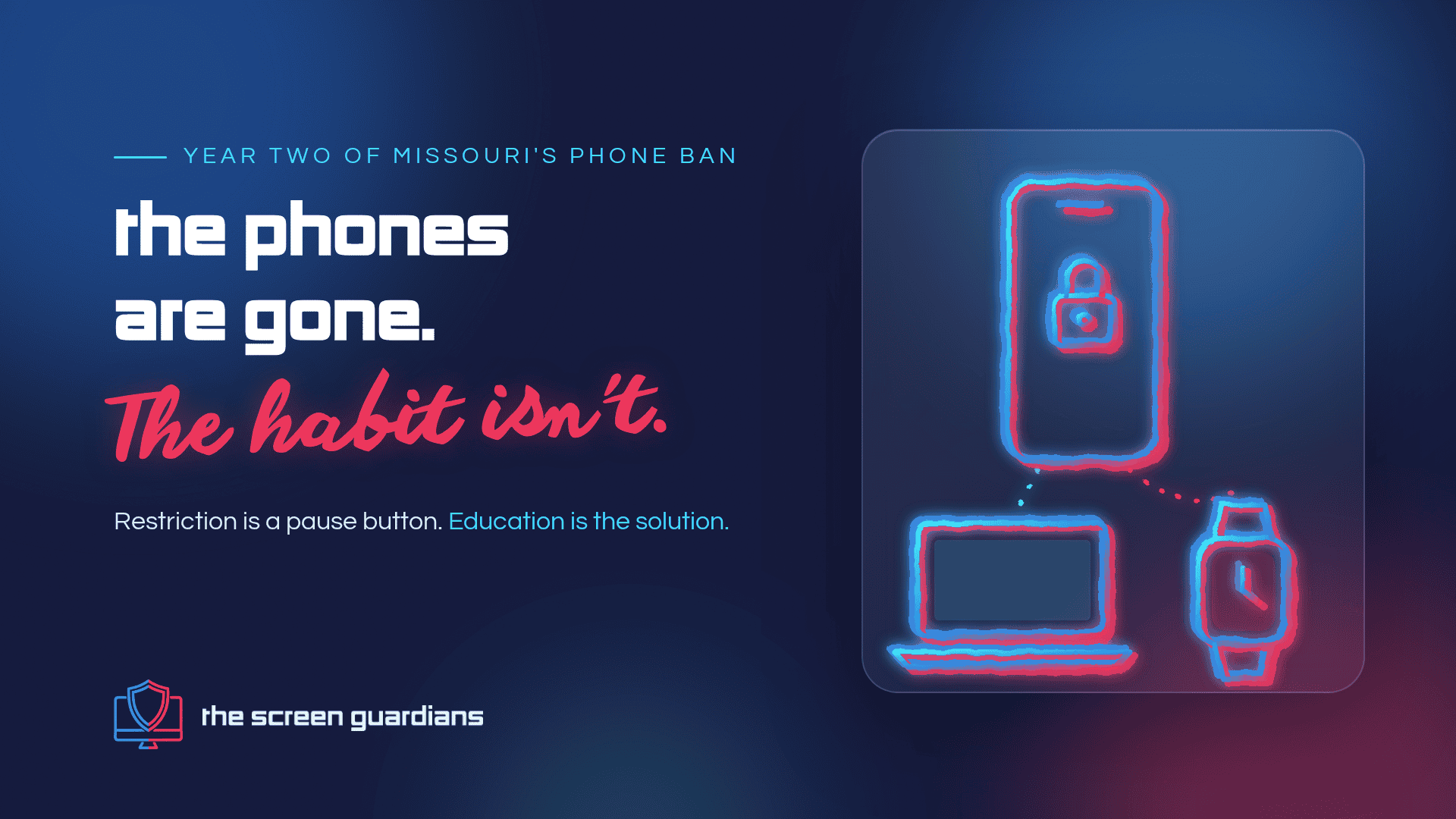
But the same survey surfaced something else. MSTA’s Morgan Buresh told KCTV5 that some teachers saw students “turned to different distractions.” The phone went in the pouch. The laptop and the smartwatch took its place.
The phone left the room. The pull didn’t.
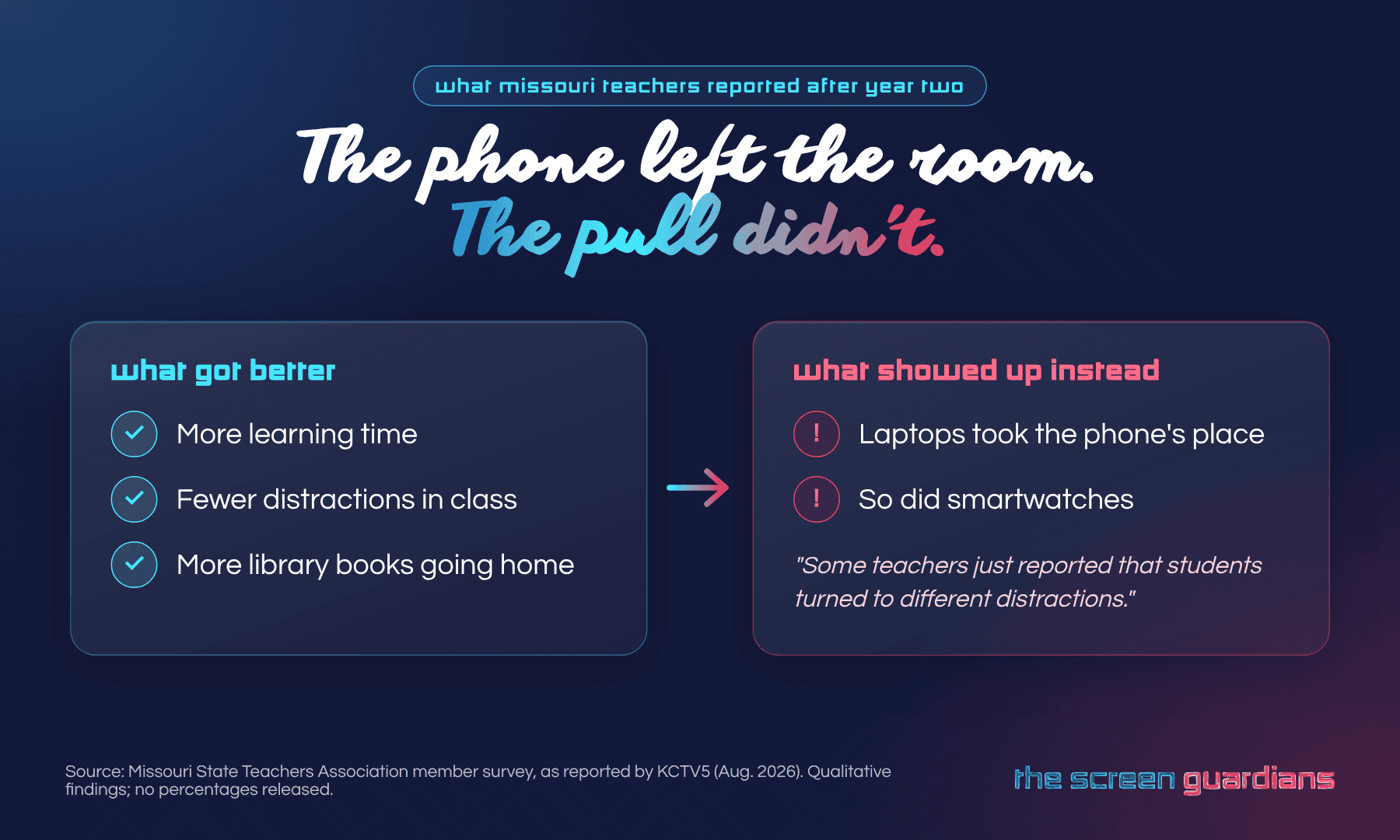
Table of Contents
The Missouri School Cell Phone Ban Isn’t a Policy That Failed
I want to be careful here, because this is exactly where the conversation tends to go sideways.
Nobody did anything wrong. Technology came into classrooms for good reasons: to support teachers and to give every student the same shot. Districts adopted phone policies because teachers asked for help. Legislators listened. That’s the system working.
The ban did what bans do. It hit pause.
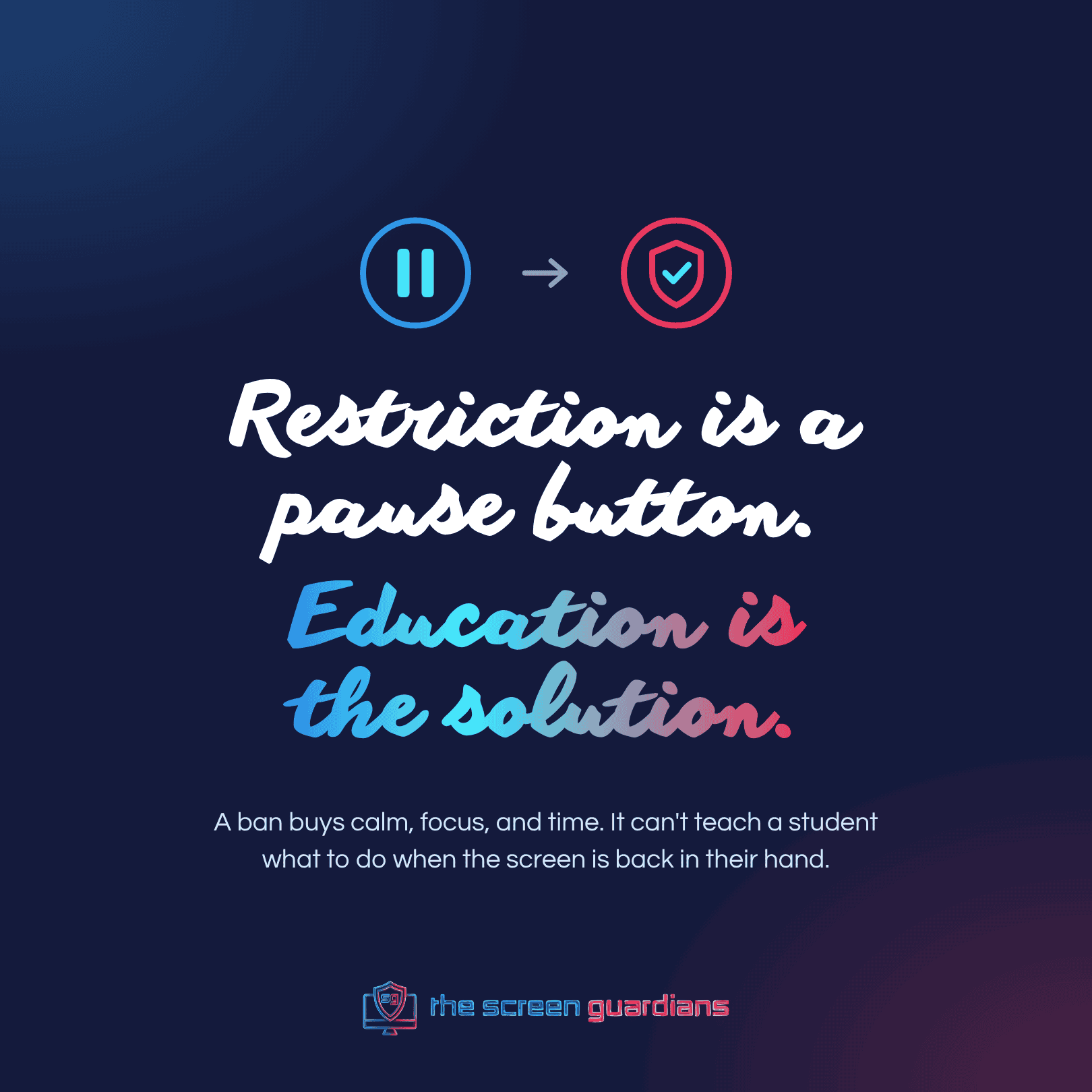
A pause button is valuable. It buys calm, focus, and time. What it can’t do is teach. Take the phone away, and a student hasn’t gained a single new skill for the moment it’s back in their hand. Or for the laptop that never left the desk.
Restriction is a pause button. Education is the solution.
Why the Habit Travels
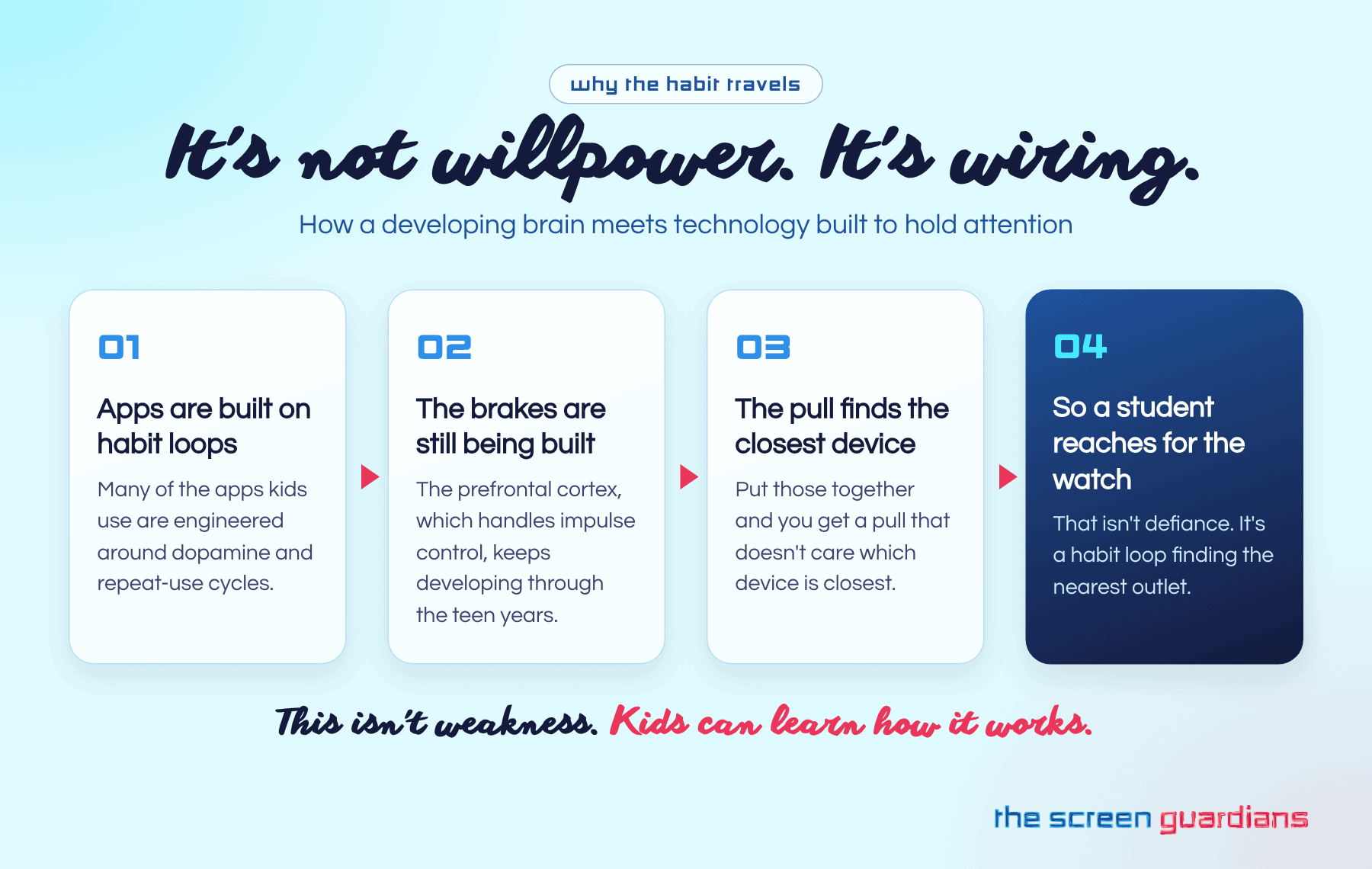
This part isn’t about willpower. It’s about how a developing brain works.
The apps our kids use are engineered around dopamine and habit loops. The part of the brain that handles impulse control, the prefrontal cortex, is still under construction all the way through the teen years. Put those two things together and you get a pull that doesn’t care which device is closest.
So when a student reaches for a smartwatch because the phone is locked away, that isn’t defiance. That’s a habit loop looking for the nearest outlet.
This isn’t weakness. This is how the brain works.
And here’s the empowering part: kids can learn how it works. When they understand what’s happening in their own heads, they stop feeling ashamed and start making choices.
The Device That Stays on the Desk
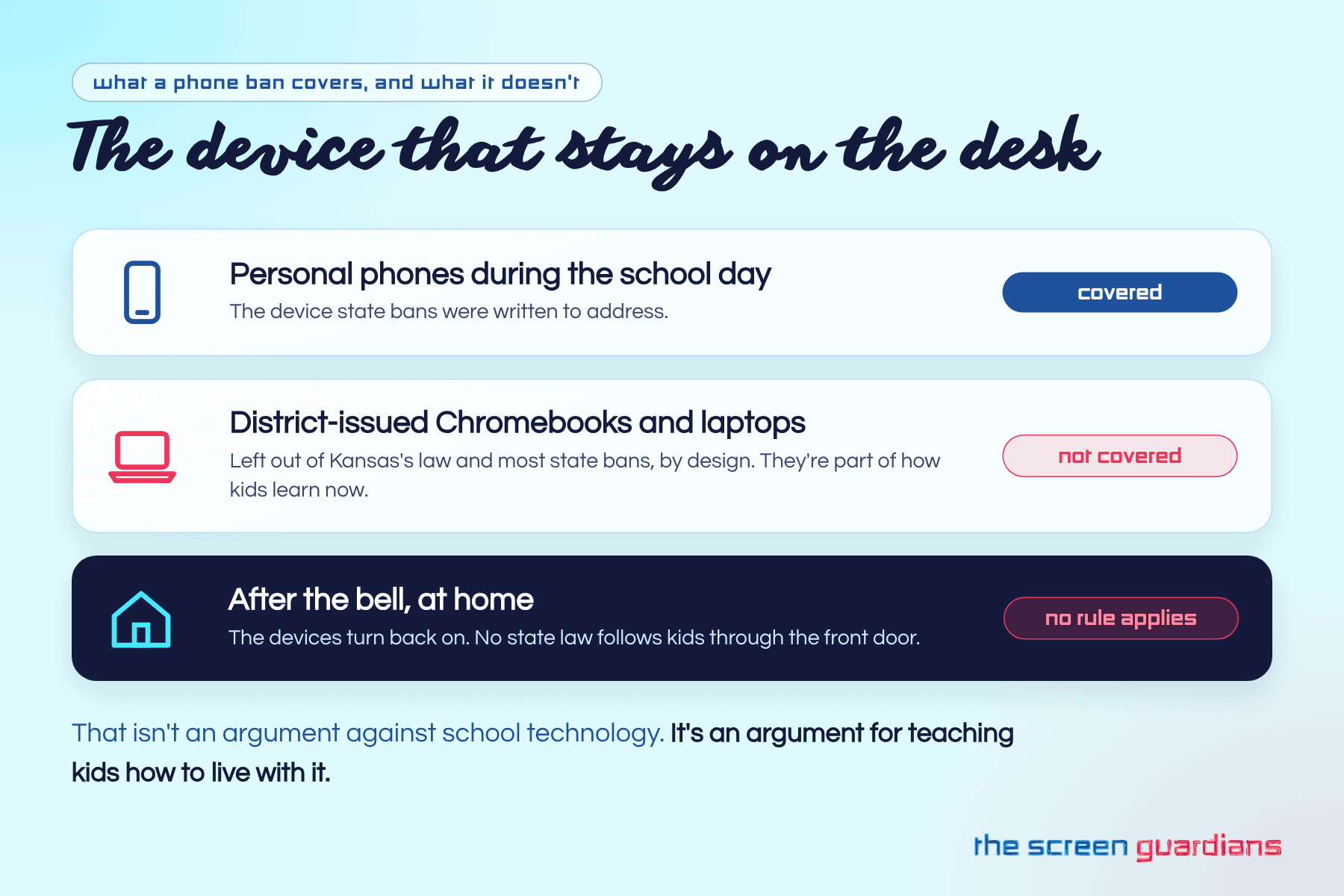
There’s one more detail worth naming. Kansas’s new law, like most state bans, doesn’t cover district-issued Chromebooks and laptops. That’s by design. Those devices are part of how kids learn now.
That isn’t an argument against school technology. It’s an argument for teaching kids how to live with it. (Parents are already asking good questions about school Chromebooks, too.)
And then the school day ends. Kids go home. The devices turn on. No state law follows them through the front door.
What the Other Half Looks Like
The question was never whether kids need this. It’s who’s going to teach it, and with what.
At The Screen Guardians, we built a K–12 digital health and safety program for exactly this gap. Not a single assembly. Not a one-off video. Real curriculum:
- One short lesson a week, 30–40 minutes, taught during the school day by students’ own teachers
- Seven modules that build on each other: the brain, the body, emotions, the digital bubble, cyber savvy, online safety, and putting it into action
- Grade-banded for K–2, 3–5, 6–8, and 9–12, so every age gets the same concepts at the right level
- A Parent Companion after every lesson, so families hear the same language at home
The program was built with a neurotherapist, a 33-year educator, and a Senior Special Agent with the Kansas Bureau of Investigation. People who see this up close every day.
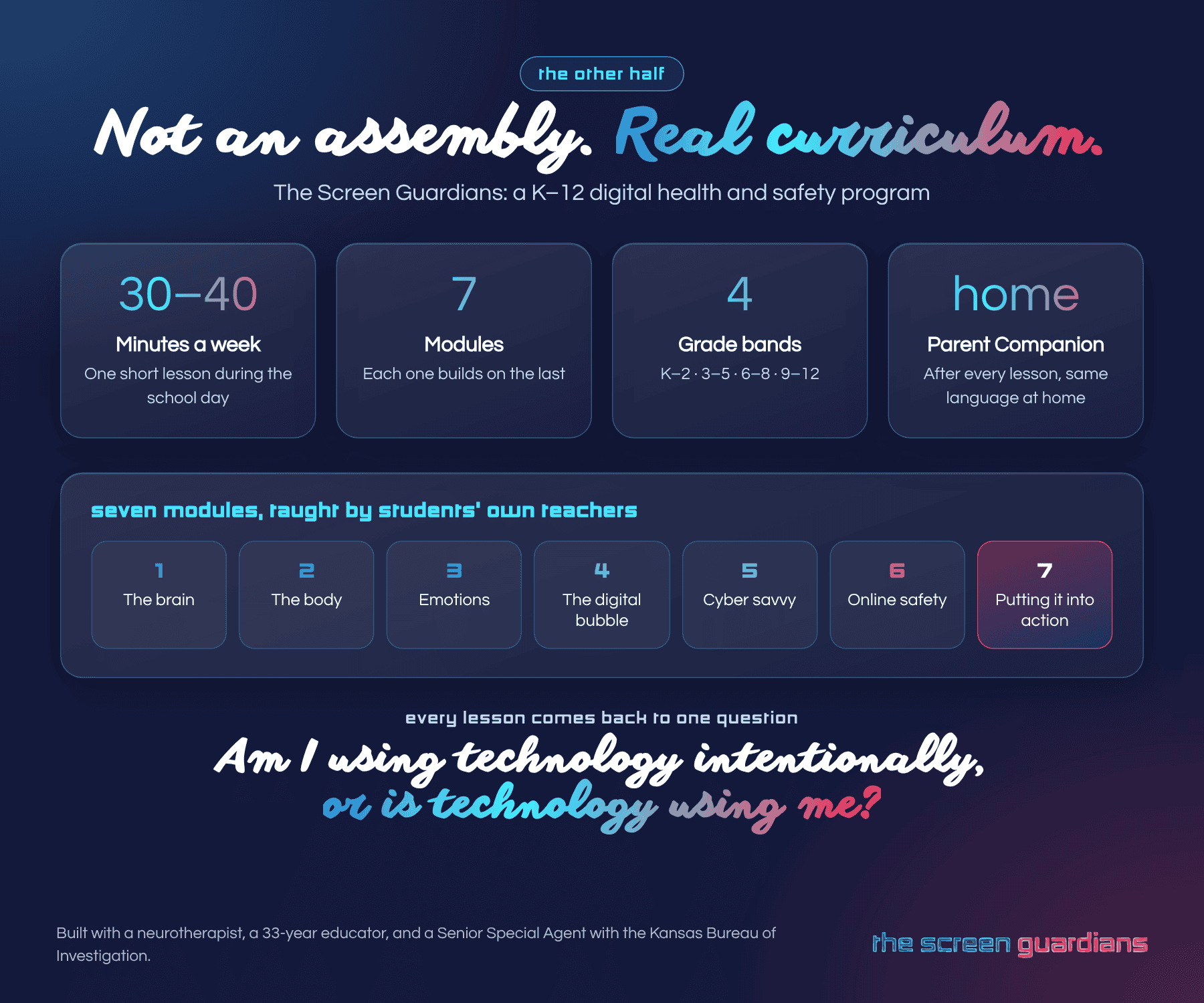
Every lesson comes back to one question we want students asking themselves: Am I using technology intentionally, or is technology using me?
A student who can answer that question doesn’t need the rule to make the choice. That’s the difference between compliance and commitment.
Three Questions for School Leaders This Fall
If your district is living under a new phone policy (Missouri, Kansas, or Illinois), it’s worth asking:
- What are our students learning about why these devices are so hard to put down?
- When the bell rings, what do they carry home besides the phone we handed back?
- Are parents hearing the same language we’re using in the building?
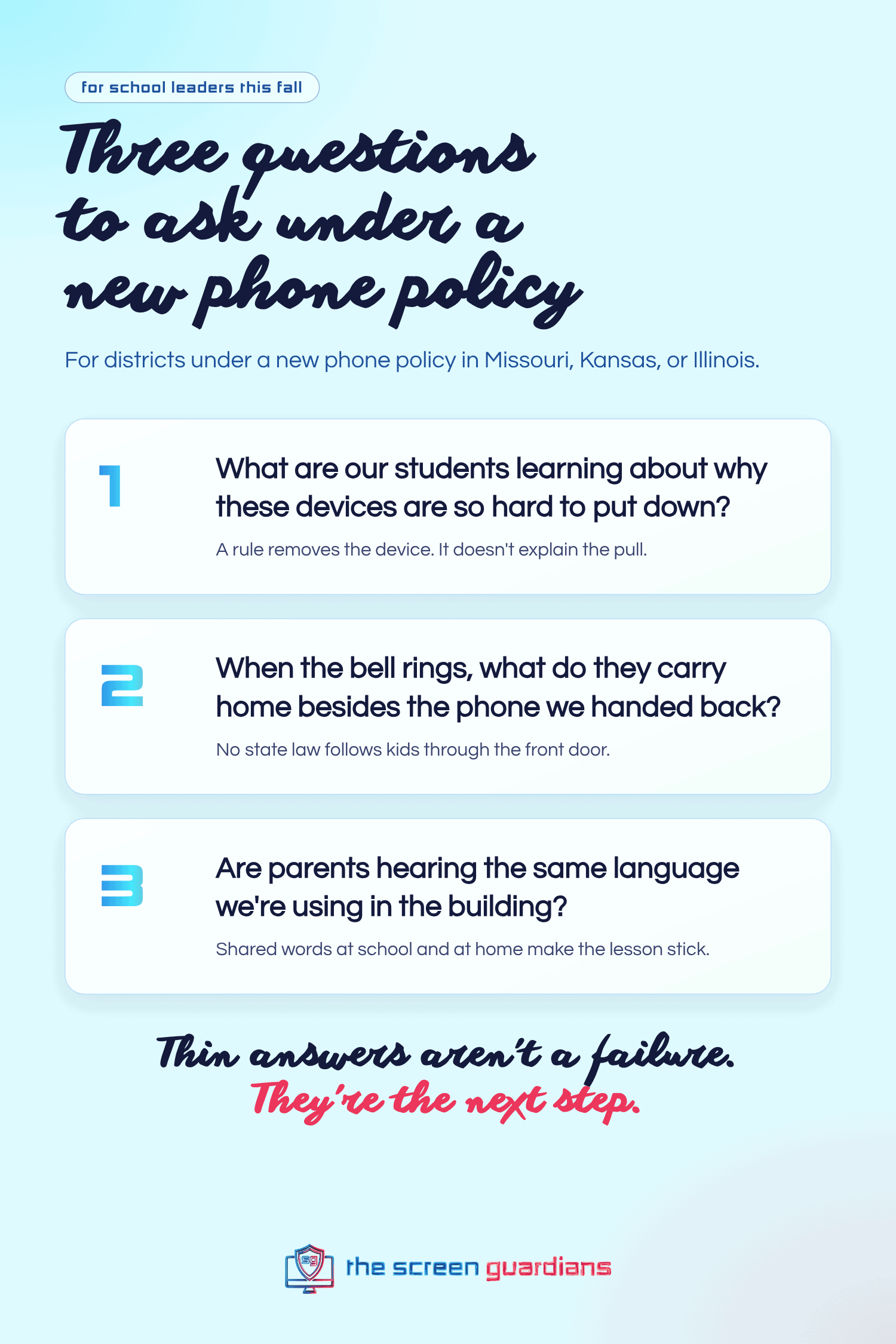
If those answers are thin, that’s not a failure. It’s the next step. See how one Kansas district rolled out digital wellness education.
Now We Know More
Missouri and Kansas did the hard part. They drew a line. Teachers are seeing the benefits.
Now we get to do the other half. When we know better, we do better, as Maya Angelou put it. And now we know a phone ban alone won’t teach a child what to do with the next screen.
Want this in your school? See how The Screen Guardians works.
Education is the greatest form of protection.
Want to go deeper at home? The Parent Portal has videos, guides, and scripts for the hard conversations.