I talk to a lot of parents who feel like they’re losing their kids to a screen. Not in a dramatic, headline kind of way — just slowly. The bedroom door closes a little earlier. The one-word answers get shorter. And underneath all of it is a question most of us are afraid to ask out loud: is my kid lonely?
In 2023, the U.S. Surgeon General declared loneliness and isolation a national epidemic — and our teenagers are at the center of it. They are the most digitally connected generation in history. They are also one of the loneliest.
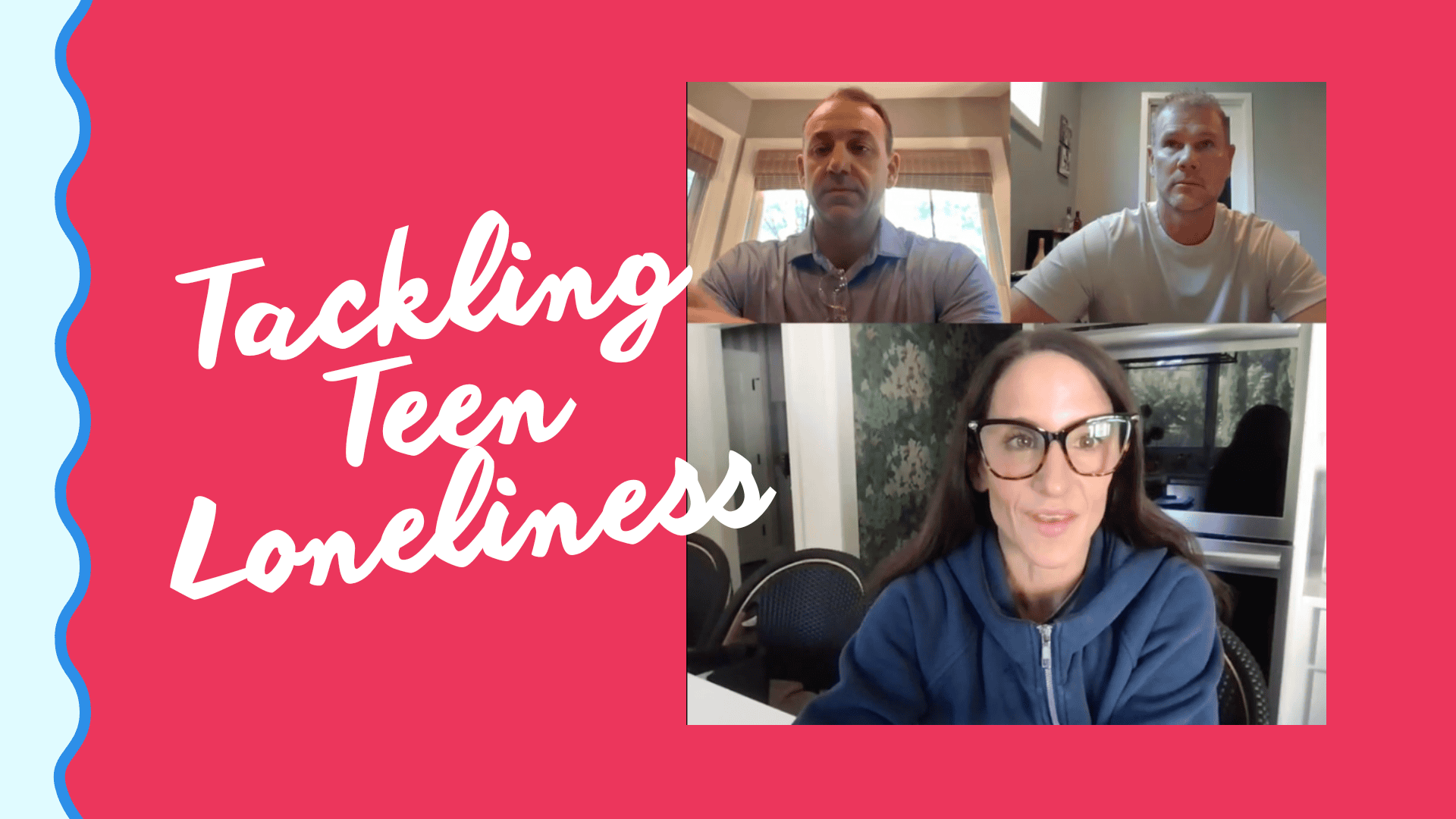
On this week’s Screen Guardians podcast, I sat down with Ryan Bevins and JP Claxton, the founder and co-founder of Fight Club — a confidential, peer-support organization for teens built on one simple, powerful idea: no one fights alone. What they’ve built is one of the most hopeful answers I’ve seen to a problem that can feel impossible. So let’s talk about it.
Table of Contents
The loneliness no one sees
Here’s the line from this episode I can’t stop thinking about. Ryan shared what his own son said at a Fight Club fundraiser: “Loneliness is hell on earth.”
Then Ryan told me something that stopped me cold. In one of his groups, all 33 kids said they struggle with teen loneliness — and the loneliest moment of their day is at night, when the device finally shuts off. They spend hours being fed a steady drip of something, and then the screen goes dark and there’s nothing there.
That’s the part we miss as parents. The phone isn’t just a distraction. For a lot of kids, it’s covering up a gap — a real, aching need for connection that a screen was never built to fill.
What Fight Club actually is
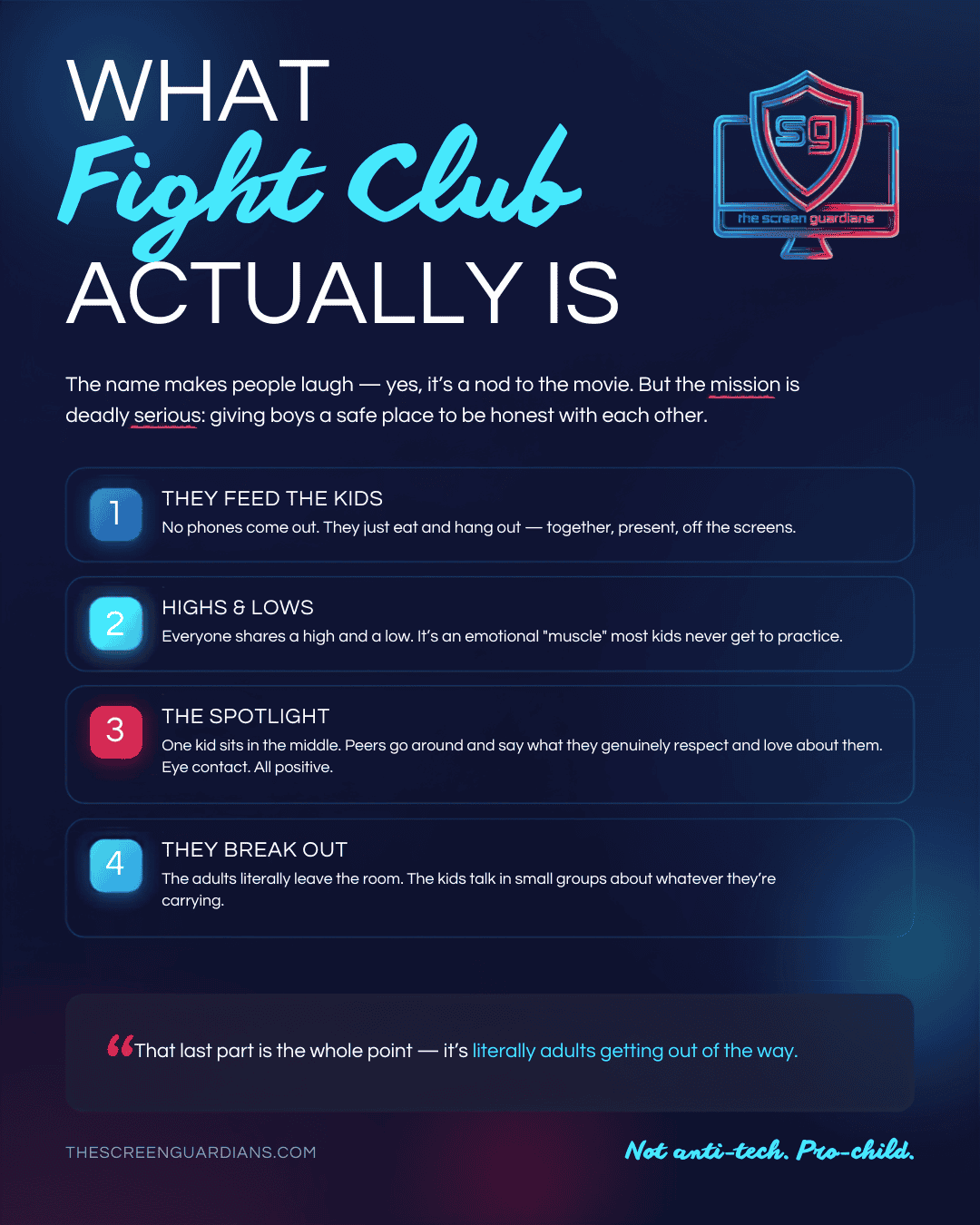
The name makes people laugh at first (yes, it’s a nod to the movie — the kids named it themselves, partly because “we don’t talk about Fight Club outside of Fight Club” is a pretty great way to explain confidentiality). But the mission is deadly serious.
Ryan started it when he noticed a handful of boys in his son’s freshman class all quietly going through the same hard things — parents divorcing, pressure piling up — and none of them knew how to say it out loud. So he gave them a safe space to do exactly that. JP came alongside him and helped turn a single group into a growing movement.
The structure is refreshingly simple:
- They feed the kids. No phones come out. They just eat and hang out.
- Highs and lows. Everyone shares a high and a low since the last meeting. Ryan and JP call it exercising an emotional “muscle” — one most kids never get to practice.
- The spotlight. One kid sits in the middle, and their peers go around and say what they genuinely respect and love about them. Eye contact. All positive. No backhanded compliments allowed.
- They break out. The adults literally leave the room. The kids talk in small groups of about eight — about whatever they’re carrying.
That last part is the whole point. As JP put it, this is “literally adults getting out of the way.” Kids have plenty of grown-ups telling them what to do. What they don’t have is enough safe places to be honest with each other.
What happens when the phones go quiet
My favorite moment from the conversation was small, but it says everything.
JP said that almost every meeting, a kid will walk out, then come sprinting back in: “Mr. Claxton, I forgot my phone — do you know where it is?”
Think about that. They forgot their phone. For a couple of hours, surrounded by people who actually see them, the device just… disappeared from their mind. That’s not a lecture about screen time. That’s proof of what kids are hungry for when we give them a real alternative.
Because here’s the truth we talk about all the time at Screen Guardians: kids aren’t going to walk away from screens because we tell them to. They’ll walk away when they get a taste of something better. Fight Club gives them that taste.

Affirmation from the right places
JP said something that every parent of a teen should sit with. Our kids are looking for affirmation — that’s normal, it’s developmental. The problem is where they’re looking for it.
They open Instagram and see the parties they weren’t invited to. They see a version of perfect that isn’t even real. And they measure themselves against it, alone, in the dark. As JP said, “they’re looking for affirmation from all the wrong places.”
The spotlight flips that completely. Instead of comparison from strangers, a kid hears a peer say something true and kind about them, to their face. For a teenager, being seen like that is enormous — and it’s the exact opposite of what a feed is designed to do.
Breaking the mental health stigma — especially for boys
One of the smartest things Fight Club has done is partner with a mental health group, Kids TLC, and quietly weave licensed therapists into the groups themselves. The kids build a relationship with “Malik” or “Leah” in a low-key, non-threatening way — long before anyone needs a formal appointment.
The result? There’s no “I’m going to see a therapist.” There’s just, “I want to talk to my buddy Malik about something.” That small shift dismantles a huge amount of stigma — especially for teenage boys, who so often feel like asking for help means admitting they’re broken.
And it works. In one recent stretch, kids logged around 75 therapy sessions in five months — many of them encouraged by their own friends checking in: how’d your session go? That’s not the world most of us grew up in. That’s a culture of kids carrying each other’s burdens.
What every parent can take from this
You don’t have to start a Fight Club to apply the heart of what Ryan and JP are doing. Their message to parents was simple:
Your kid is probably lonelier than they let on — and the answer isn’t more control. It’s more connection. It’s creating even one space, one relationship, where they feel safe enough to be honest. Sometimes that’s you. Sometimes it’s a coach, a mentor, or a group of peers who’ve decided to do life together.
As JP said, absent a real alternative, kids will always default to the screen they already know. So we give them the alternative. Real connection. Real love. Real people in the room.
That’s not anti-technology. It’s pro-child. And it’s exactly the kind of hope we’re here for.
Listen to the full episode on Teen Loneliness
Ryan and JP share so much more in this conversation — including the story of a bullied teen whose life was changed when a Fight Club brother refused to let him walk away alone. It’s worth your time.
🎧 Listen to this episode of the Screen Guardians podcast — and if it resonates, share it with a parent, coach, teacher, or youth pastor who has a teen in their life. You can learn more about Fight Club at fightclub-us.com.
Want steady, judgment-free support as you navigate all of this at home? That’s exactly why we built the Parent Portal — real tools and real voices, so you never have to figure it out alone. Or join our newsletter for grounded, practical guidance in your inbox.
You’re not alone in this. Neither are our kids.

If you or a teen in your life is struggling, you’re not alone — the 988 Suicide & Crisis Lifeline offers free, confidential support 24/7 by calling or texting 988.