In our hyper-connected world, where notifications never sleep and screens beckon with each waking moment, the term “Social Media Addiction” has emerged as a quiet yet powerful force shaping our daily lives. It’s a familiar story for many: a quick check of a social app spirals into hours lost in the digital maze. This phenomenon isn’t just a fleeting trend; it’s a growing concern that taps into deep questions about our mental health, attention, and well-being. As we delve into the complexities of social media addiction, we’ll explore not only its implications but also potential pathways to a healthier relationship with technology. This journey isn’t about blame; it’s about awareness and the gentle guidance toward balance in a world that often feels overwhelming.
Table of Contents
The Trial Is Bigger Than the Courtroom
Across the country, lawsuits against major tech companies are raising a critical question: Did social media platforms knowingly design products to be addictive for young users? The legal outcomes are still unfolding, but something bigger is happening. We are witnessing a cultural shift. For decades, society prioritized convenience, connectivity, and innovation. Now, we are increasingly prioritizing health — and that includes digital health. This moment matters.
Lawsuits involving companies like Meta argue that executives were aware of the ways algorithm-driven design could negatively impact teen mental health, yet continued optimizing platforms for engagement. At the center of these cases are concerns about:
- Algorithmic amplification
- Persuasive design features
- Dopamine-driven engagement loops
- The mental health impact on youth
Regardless of legal rulings, the public conversation has shifted. Parents are asking harder questions. Schools are re-evaluating phone policies. States are debating age protections and digital safety legislation. We are no longer blindly celebrating digital access. We are examining its cost.
Social Media Victims Law Center: Meta Lawsuits – 2026 Update
What qualifies as a social media addiction?
Social media addiction can be understood as a compulsive need to engage with social media platforms at the expense of other life activities and responsibilities. It is characterized by several key behaviors and experiences:
- Excessive Time Spent Online: Individuals find themselves spending more time on social media than intended, often losing track of time.
- Preoccupation: There is a persistent urge to check social media, even during activities that require focus, such as work or school.
- Withdrawal Symptoms: Feeling restless, anxious, or irritable when unable to access social media can indicate an addictive pattern.
- Neglect of Responsibilities: Important tasks and responsibilities may be neglected in favor of spending time on social media.
- Negative Impact on Relationships: Social interactions may suffer as face-to-face communication is replaced by virtual interactions.
- Escaping Reality: Using social media as a way to escape from problems or to relieve negative moods like stress or depression.
- Failed Attempts to Cut Back: Repeated unsuccessful attempts to reduce time spent on social media can also point to an addiction.
In essence, social media addiction mirrors other behavioral addictions, where the activity becomes a predominant focus of a person’s life, disrupting their ability to maintain healthy relationships or fulfill obligations.
A New Priority: Health — Including Digital Health
Over the past decade, mental health has moved to the forefront of cultural awareness. Conversations about anxiety, depression, emotional regulation, sleep, and trauma-informed care are now mainstream. Digital health is the natural next step.
- It is not anti-technology.
- It is not fear-based.
- It is not about total restriction.
Digital health is about balance. It is the ability to use technology intentionally rather than impulsively. It is understanding how digital environments shape attention, emotions, and identity. It is protecting brain development while teaching responsibility and wisdom. For adults, that is challenging. For children — whose brains are still developing — it is even more complex.
Cambridge University Press / American Journal of Law & Medicine: Algorithms, Addiction, and Adolescent Mental Health
What “Addictive by Design” Really Means
Social media platforms are not neutral tools. They are engineered environments. Algorithms analyze what users watch, like, pause on, and share — then deliver more of it. For youth, this means rapid personalization during one of the most vulnerable developmental stages of life. Persuasive design features — infinite scroll, variable rewards, streaks, autoplay, social validation metrics — are rooted in behavioral psychology. They are designed to keep users engaged.
These features activate dopamine pathways associated with reward and habit formation. Meanwhile, the adolescent brain is still developing. The prefrontal cortex — responsible for impulse control and long-term decision-making — is not fully mature. The system is optimized. Their brains are still under construction. That mismatch deserves attention.
PBS NewsHour: Landmark trial accusing tech giants of harming children with addictive social media begins (Feb 2026)
The Cultural Shift: From Blame to Awareness
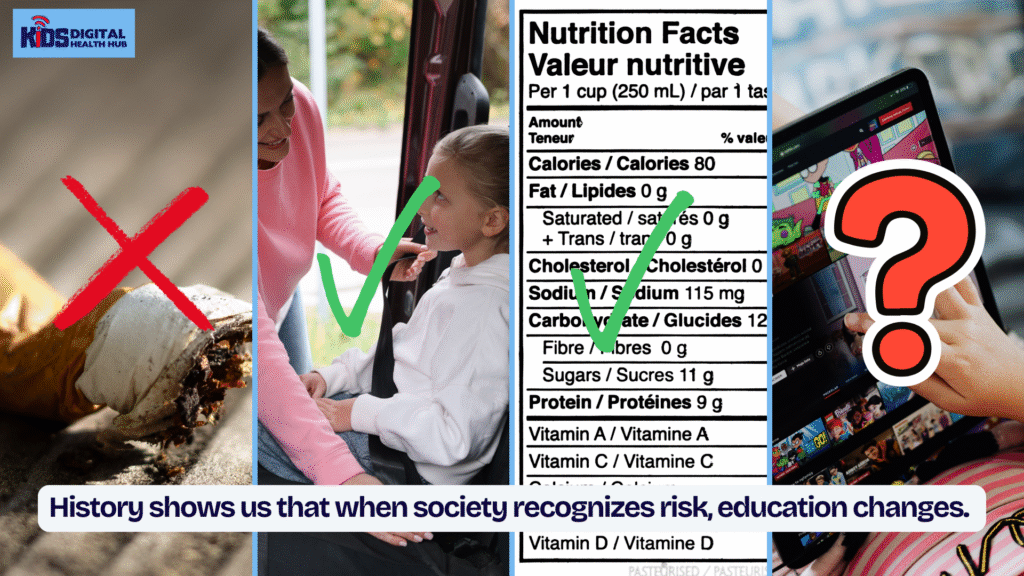
For years, the narrative often sounded like this: “Kids just need more self-control.” “Parents need stricter rules.” “This is just the world we live in now.” The current legal and cultural moment challenges that framing. It asks whether responsibility should also include the design environment itself. History shows us that when society recognizes risk, education changes.
- Tobacco awareness shifted norms.
- Seatbelt laws saved lives.
- Food labeling improved transparency.
When we understand the environment, we equip people to navigate it wisely. The same must happen with digital environments.
What This Means for Youth
If culture is shifting, education must shift with it. Digital literacy can no longer stop at “be kind online” or “don’t talk to strangers.” Youth must be taught:
- How algorithms shape what they see
- Why their feed looks different from someone else’s
- Why extreme or emotional content travels faster
- How engagement fuels visibility
- How persuasive design influences behavior
- Why streaks feel urgent
- Why notifications feel rewarding
- Why it can feel difficult to stop scrolling
- How manipulation appears online
- Influencer marketing
- Body image distortion
- AI-generated content
- Comparison traps
- Social validation cycles
When students understand the system, shame decreases and agency increases. Knowledge replaces confusion. Critical thinking replaces passivity.
This Is Why We Created Kids Digital Health Hub
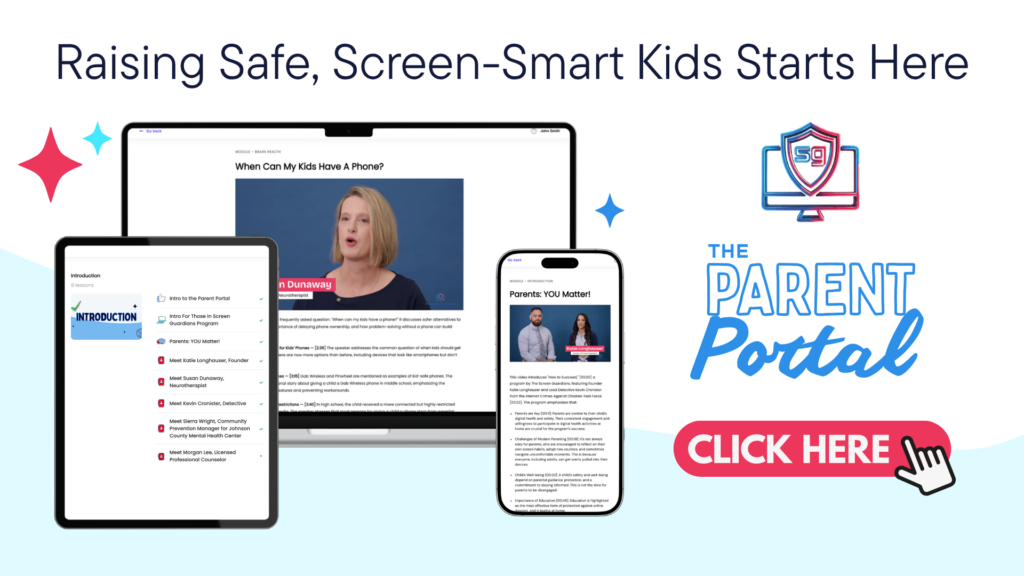
The legal system may take years to sort out accountability. Our children cannot wait. Which is why we created The Screen Guardians, The Parent Portal, and the full suite of Kids Digital Health Hub resources. Not out of panic. Not out of fear. But out of responsibility. Digital health requires education, alignment, and ongoing support. We equip parents with knowledge about brain development, dopamine, algorithms, persuasive design, and online risks so conversations at home are informed rather than reactive. We equip educators with structured, age-appropriate programming that teaches students how digital environments shape attention, identity, and mental health — and how to respond when boundaries are crossed. We equip communities with shared language and shared responsibility. Because protecting children in a digital world is not an individual effort. It is a collective one.
The Opportunity in This Moment
The trial represents more than litigation. It represents a shift in prioritization. We are moving from:
- Reaction to prevention
- Blame to understanding
- Restriction alone to education with boundaries
- Access without guidance to access with wisdom
Technology is not going away. The question is whether we will teach children how to engage with it in a healthy way — or leave them to navigate engineered systems alone. Education is the greatest form of protection. Digital health is no longer optional. It is foundational.