
The phones are in the pouches. The lockers. The office.
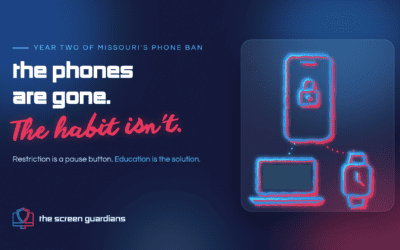
Here in Kansas, “Bell to Bell, No Cell” took effect this fall. Across the country, more states and districts are adopting a phone ban in schools, too. And honestly? I’m grateful. It gives kids seven hours a day to be fully present: to learn, to talk, to just be kids.
But as a mom of three and a former nurse, I keep coming back to one question:
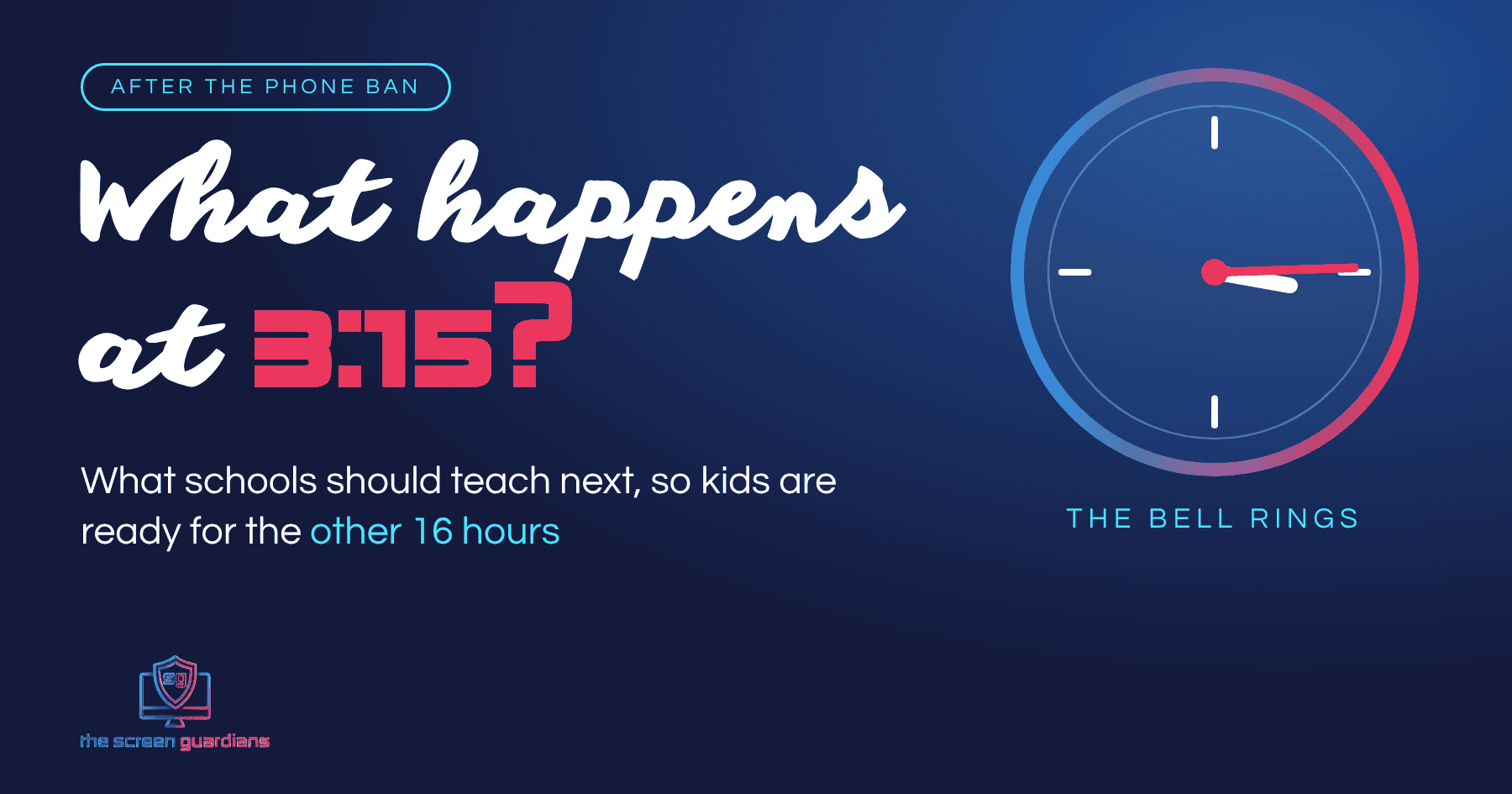
What happens at 3:15?
The bell rings. The phone comes back out (or any other personal device or platform). And everything our kids face online is still waiting for them: the infinite scroll, the algorithm that knows them a little too well, the person on the other side of the DMs, the AI chatbot that always has an answer.
A phone ban can protect the school day. (For the most part. We must remember students likely still have Chromebooks or a school-issued device with ads and other distracting features, which we will address at another time.) However, a phone-free school day doesn’t prepare a child for the other 16 hours. That’s where education comes in.
Table of Contents
The courts are confirming what parents already felt
This week, Snap settled a social media addiction lawsuit just days before opening statements in Los Angeles. Two teens claimed the platform was built to be addictive and contributed to their depression, anxiety, and eating disorders (Reuters). Meta had settled with the same plaintiffs only days earlier (CNBC).
That’s not the whole story:
- March 2026: A Los Angeles jury found Meta and YouTube negligent in the first bellwether trial and awarded $6 million (JURIST).
- August 2026: Meta agreed to pay up to roughly $18 billion to settle claims from state attorneys general that it designed Instagram and Facebook to hook young users. It also agreed to daily time limits for teens (CNN, Meta 10-Q).
- Still ahead: More than 1,600 claims from families and school districts remain pending in Los Angeles alone, with the next trials set for March 2027 (JURIST).
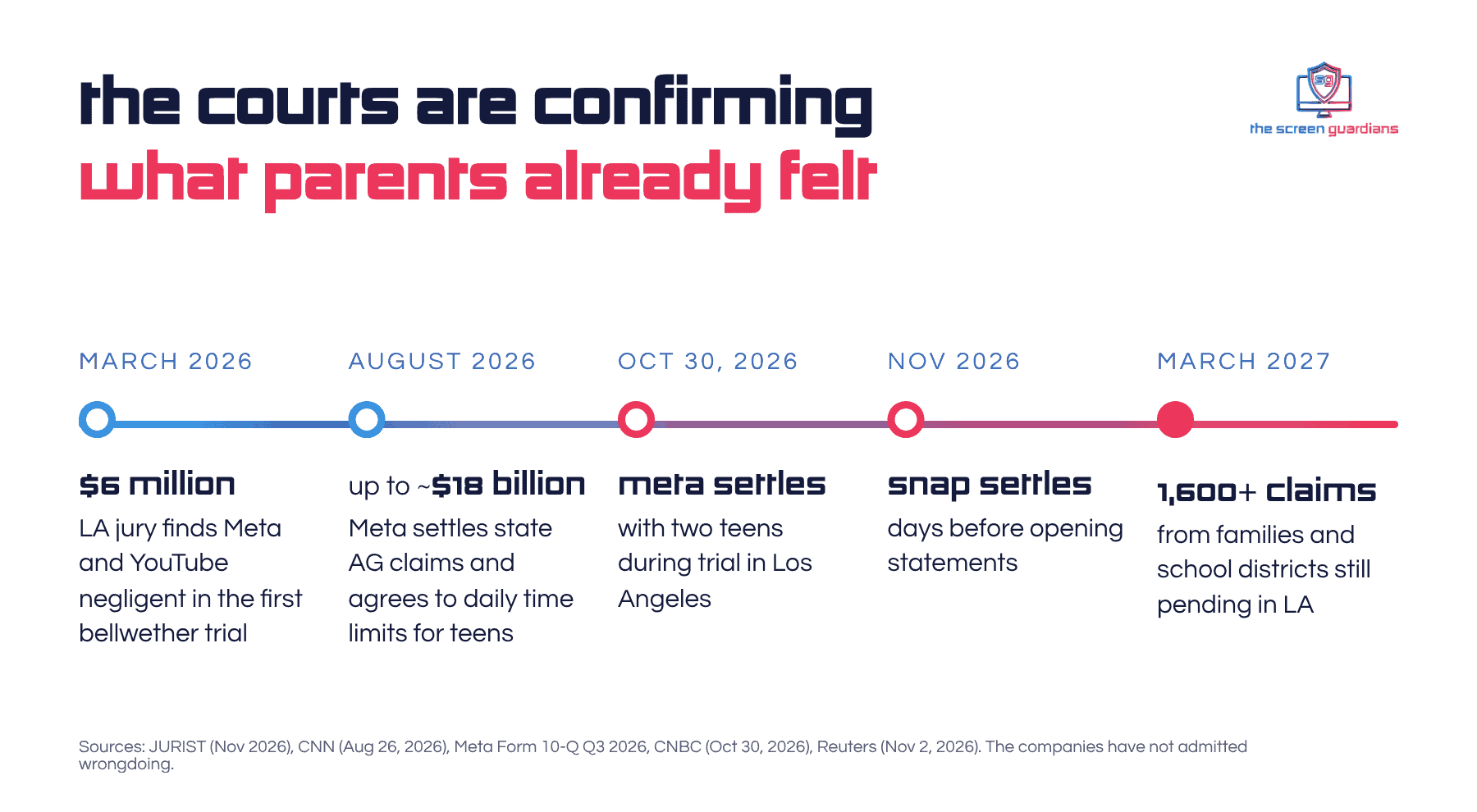
The companies have not admitted wrongdoing. But the pattern in these cases is the same: features like infinite scroll, autoplay, streaks, and personalized feeds were designed to keep kids on as long as possible.
That’s persuasive design. And a 12-year-old’s brain, still under construction, is no match for a team of engineers optimizing for attention.
Why a phone ban in schools isn’t enough
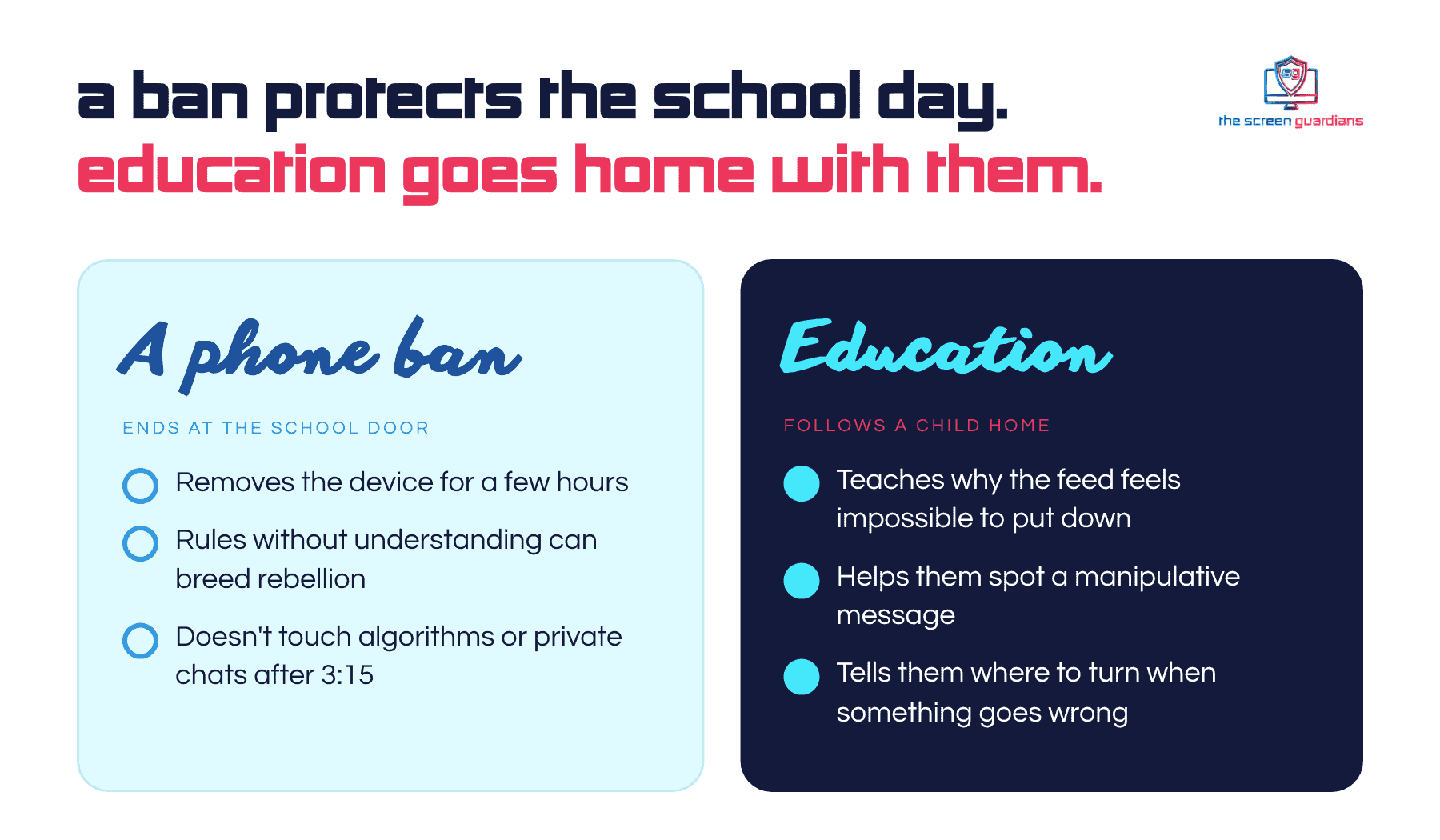
Rules without understanding often breed rebellion. And a rule that ends at the school door can’t follow a child home.
So what should parents actually watch for? My friend Ben Gillenwater, the Family IT Guy and a 30-year cybersecurity expert, puts it simply. When you evaluate any app, look for two red flags:
- Algorithms. Does the app decide what my child sees next? A feed built to maximize engagement doesn’t understand childhood. It understands attention. That’s the design at the heart of every lawsuit above.
- Private chats. Can strangers message my child? DMs, group chats, and in-game chat are where predators find kids. In 2025, the National Center for Missing & Exploited Children received more than 3,800 reports of suspected online enticement every single day (NCMEC).
Let’s now talk about AI chatbots
Many think they’re harmless, and I would argue we’ve normalized this engagement with Siri and Alexa, but they are far from innocent. AI chatbots make both concerns (algorithms and chat features) much worse because they provide 1) a personalized feed that talks back, and 2) a private conversation with something that always has an answer. 🚩🚩🚩
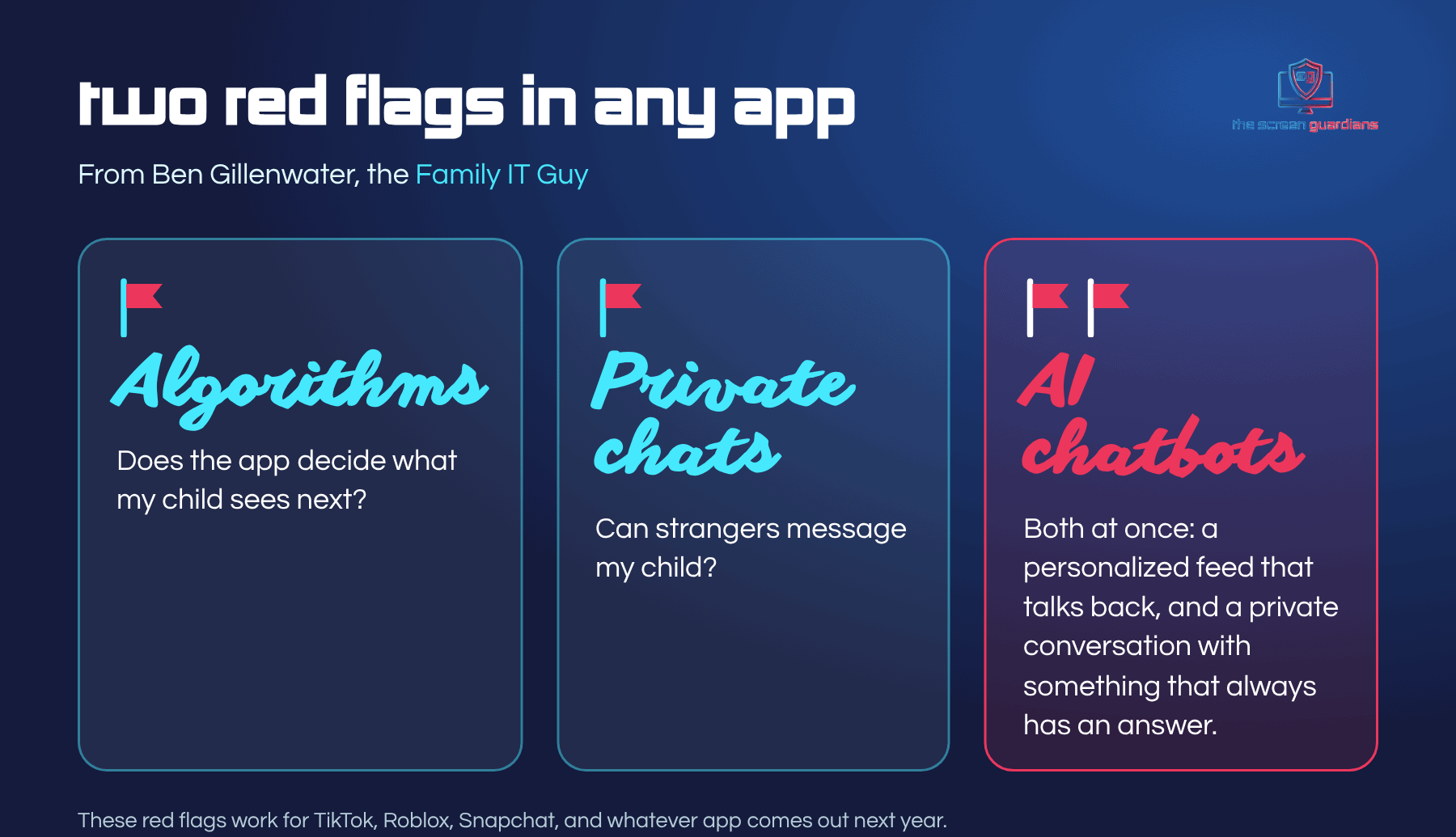
These red flags work for TikTok, Roblox, Snapchat, and whatever app comes out next year. And the phone ban doesn’t touch either one once school lets out.
A ban removes the device for a few hours. It doesn’t teach a child why the feed feels impossible to put down. It doesn’t help them spot a manipulative message. And it doesn’t tell them where to turn when something goes wrong.
Only education does that.
What schools should teach next
The Kansas State Board of Education is about to vote on a new instructional technology policy, and it’s already moving in the right direction. Section B.3 now asks districts to educate and support educators and families using unbiased resources and peer-reviewed research.
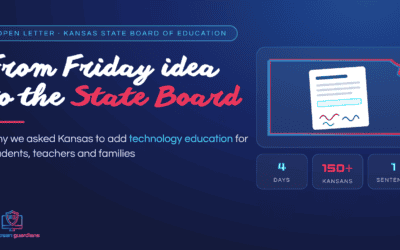
That’s exactly what more than 150 Kansans asked for in our open letter, in under 48 hours. Thank you to every parent, teacher, and student who signed.
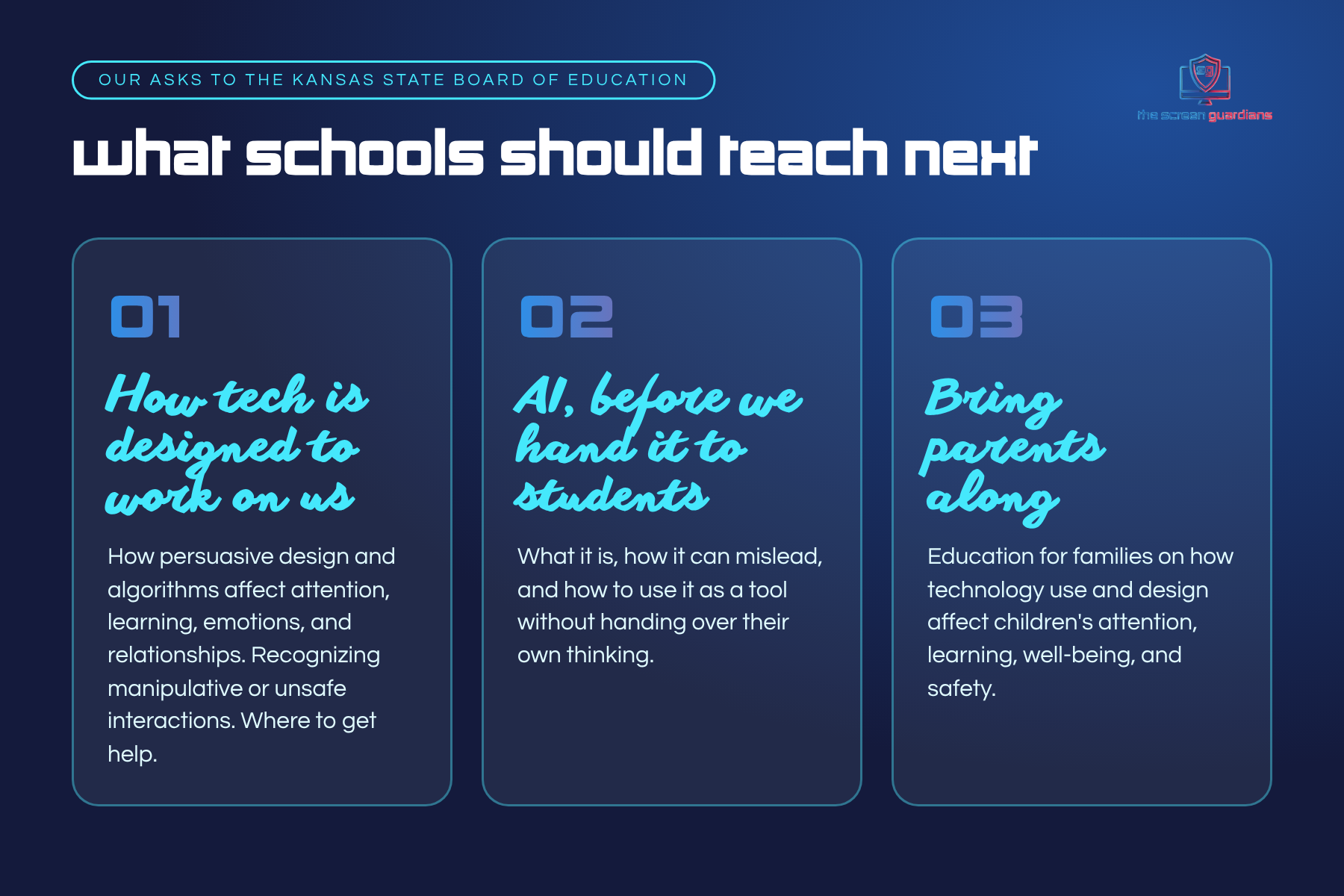
Susan Dunaway and I have asked the Board to consider three small additions. Together, they answer the question this post started with.
- Teach how technology is designed to work on us. Today’s draft defines digital citizenship as responsible, respectful online behavior. Kindness matters. But kindness without discernment can leave kids vulnerable. We’ve asked to add understanding how persuasive design and algorithms affect attention, learning, emotions, and relationships; recognizing manipulative or unsafe interactions; and knowing where to get help when harm happens.
- Teach AI before we hand it to students. We’ve already seen what happens when kids get powerful technology first and education later. With AI, the education should come first: what it is, how it can mislead, and how to use it as a tool without handing over their own thinking.
- Bring parents along. Offer families education on how technology use and design affect children’s attention, learning, well-being, and safety. Parents shouldn’t have to figure this out alone.
This isn’t a new idea. The National Academies of Sciences has called on state boards to set K–12 standards so students understand how online media work and can protect themselves, with materials for parents too (National Academies).
When kids understand the system, shame decreases and agency increases. A child who knows why the app keeps pulling them back is a child who can choose to put it down.
Where we go from here
The phone ban was a good first step. Education is the next one. And it takes all of us: teachers, parents, and students working together.
A few things you can do this week:
- Talk to your kids about design, not just time. Ask: “Why do you think this app never runs out of videos?” Curiosity opens doors that rules can’t.
- Make a plan for mistakes. Let your child know they can always come to you, without shame, when something online goes wrong.
- Ask your school what comes next. What are students learning about algorithms, AI, and online safety now that phones are put away?
- Speak up. If you’re a Kansan, share your support with your State Board member before the vote.
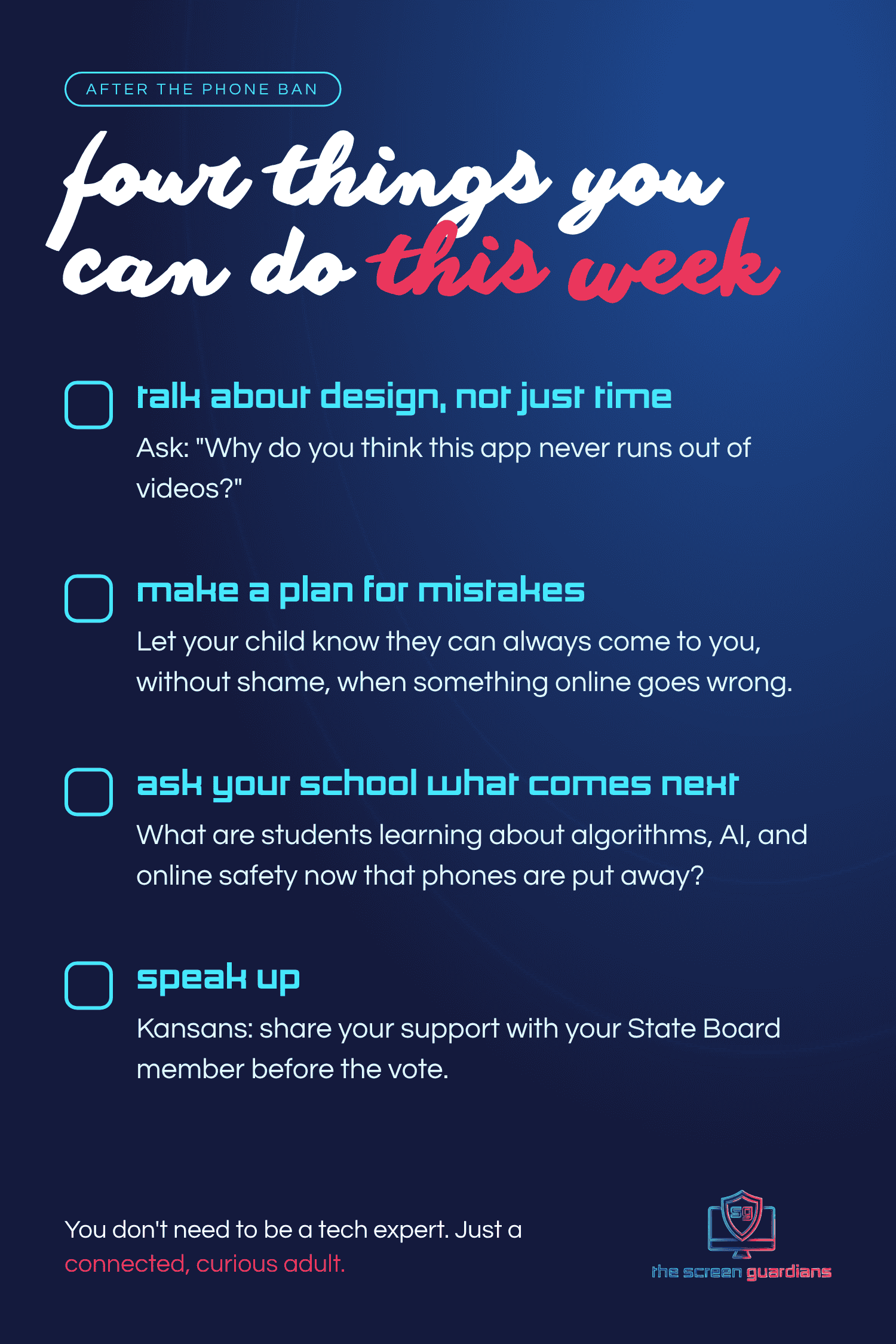
You don’t need to be a tech expert. Just a connected, curious adult.
If you want support along the way, the Parent Portal has conversation starters, scripts for hard talks, and a Recovery Plan for digital mistakes. And if your school is ready to take the next step, we’d love to talk about The Screen Guardians K–12 digital safety curriculum.
Not anti-technology. Pro-child. Education is the greatest form of protection.
Katie Longhauser, RN, BSN, Founder and CEO, The Screen Guardians
Frequently asked questions about the phone ban in schools
Is a phone ban in schools enough to keep kids safe online?
A phone ban protects the school day, but it ends at the school door. Kids still face algorithms, private chats, and AI chatbots after 3:15, so they need education on how technology is designed to work on them and where to turn when something goes wrong.
What should schools teach after a phone ban?
Three things: how persuasive design and algorithms affect attention, learning, emotions, and relationships; what AI is, how it can mislead, and how to use it as a tool; and education for parents so families aren’t figuring this out alone.
What are the two red flags to look for in any app?
Algorithms (does the app decide what my child sees next?) and private chats (can strangers message my child?). AI chatbots combine both: a personalized feed that talks back and a private conversation with something that always has an answer.
How can parents support a school phone ban at home?
Talk to your kids about design, not just time. Make a plan for mistakes so they know they can come to you without shame, and ask your school what students are learning about algorithms, AI, and online safety now that phones are put away.
Sources
- Snap settles with two teens during trial (Reuters via Investing.com, Nov 2, 2026)
- Snap settles California social media addiction lawsuit days after Meta (JURIST, Nov 2026)
- Meta settles with teen during trial (CNBC, Oct 30, 2026)
- Meta settles landmark state child harm claims (CNN, Aug 26, 2026)
- Meta Platforms Form 10-Q, Q3 2026 (SEC)
- 2025 CyberTipline Report (NCMEC)
- Family IT Guy
- Social Media and Adolescent Health (National Academies, 2023)