The school year ends in an hour. The backpacks get dropped by the door, and suddenly there are three months of unstructured days stretching out in front of you. If you felt a little flutter of anxiety reading that sentence, you are in good company.
That is exactly where this episode of the Screen Guardians Podcast begins. Katie sat down with her friend Janelle Campbell — a mom of three, a former labor-and-delivery nurse, and someone who has spent years figuring out what an intentional summer actually looks like. The honest truth they kept coming back to: summer screen time tends to creep up when the structure of the school day disappears. Less structure, hotter afternoons, more “I’m bored” — and the tablet starts looking like the easiest answer.
This post pulls together the practical, doable ideas from their conversation. No fear. No perfect-parent pressure. Just a calmer way to head into summer.
Table of Contents
Why Summer Screen Time Creeps Up (and Why That’s Normal)
When kids go from eight structured hours a day to none, something has to fill the gap. Often, it is a screen.
Janelle named it plainly. Mornings with no plan tend to slide into a bag of chips eaten in your bed at 8 a.m. with a cartoon playing. Been there? Most of us have. This is not a character flaw in your kids or in you. It is what happens when the day has no shape.
There is also the “summer slide” to consider — that natural drop-off when kids go from learning and creating every day to three months of nothing scheduled. Screens fill that void fast because they ask nothing of a tired parent and deliver instant dopamine to a bored kid.
So the goal is not to white-knuckle your way to a screen-free summer. The goal is to be intentional about what fills those open hours instead.
Start by Asking: What Do You Want Summer to Feel Like?
Before you build a single rule, Janelle suggests starting somewhere softer: What would a really good summer feel like in your house?
For some families, that is adventure every day and every hour booked. For others, it is slow mornings, one activity, and an early bedtime. There is no right answer — only the one that fits your family.
A few prompts to sit with:
- What do I want my kids to know how to do by the time they leave home? (Janelle backs into her summer from this question — cooking, laundry, real-life skills.)
- What is one thing we would regret not doing this summer?
- Where does our family actually feel happiest — busy and out, or home and slow?
This is the “begin with the end in mind” idea that Susan, the neurotherapist featured in the program, comes back to again and again. When you know the feeling you are after, the daily decisions get a lot easier.
Rhythm Beats a Rigid Schedule
Here is the line worth writing on your fridge: rhythm beats a tight schedule.
Janelle has tried both extremes. A wide-open summer with no plan left everyone irritable. A summer scheduled down to the minute did not feel like a break at all. What works is a loose rhythm — predictable enough to feel safe, flexible enough to breathe.
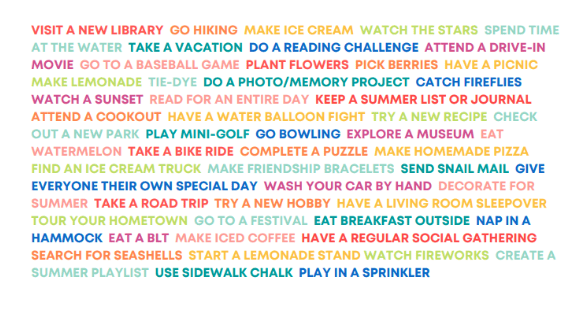
That might look like breaking the day into chunks: get out of the house in the morning, quiet time and lunch in the afternoon, a family or outdoor activity in the evening. Or it might be themed days — pool Mondays, new-park Tuesdays, library Wednesdays. The kids know what to expect, and you are not waking up to a blank slate and endless options.
As Janelle put it, the most friction between siblings happens in the “unchosen hours” — not because those hours are bad, but because nobody decided what they were for. A little rhythm decides for you.
The 15-Minute Habit That Changes the Whole House
When all three kids are home all day, parents brace for refereeing. Janelle’s antidote is small and almost suspiciously simple: 15 minutes of one-on-one, face-to-face time with each kid, ideally first thing in the morning.
Not “good job, good job.” Real attention. I see that you colored this person blue — tell me about that.
She keeps a short list of activities she actually enjoys so it never feels like a chore: Legos, walking the dog, baking protein balls, a quick card game, shooting hoops. The activity is just the excuse. The point is the kid feeling seen.
Her words: it is not earth-shattering, and it is nothing nobody has heard before. But when you actually do it, the whole house feels more like kumbaya. Everybody is nicer. Connection, it turns out, curbs a lot of the sibling chaos that screens get blamed for.
Set Screen Expectations During the Natural Transition
Summer is a built-in reset. Kids already expect their schedule to change, which makes it the easiest time of year to reset screen habits too.
For four years running, Janelle’s family has gone screen-free from the last day of school through the end of June. Family movies still happen — one parent, at least one kid, watching together — but nobody flops down to watch a show solo. The first day or two are rough. Then the creativity comes back, the kids start playing together, and it feels good.
A full screen detox is not the right fit for every family, and that is okay. The bigger principle is this: limits are a tactic, but habits are the goal. A few options to choose from:
- No screens until kids are dressed, fed, have done a chore, or have been outside
- Use small amounts of screen time as a reward after responsibilities are done
- No screens at the table
- No phones, tablets, or watches in the bedroom — everything docks somewhere else at night
And here is the part that makes it stick: kids who understand why push back less. When they learn how screens affect their developing brain and body, “because I said so” stops being the whole conversation. That is the heart of what the Screen Guardians program teaches — kids who can recognize when they need a break, and a reason behind the no.
Tools for Staying Connected (Without a Smartphone)
Summer means bikes, buddies, and kids out of the house — which is exactly when parents start asking about phones. The good news: you have options that are not a smartphone.
- Wearables like the Bark watch or Gabb watch — GPS tracking, programmable contacts, and they shut off during set hours. Janelle’s tip: kids actually wear a watch. A phone gets left in a pocket or forgotten on a bike ride.
- Safe phones like the Gabb phone — same safety features, with streaming music for the kid who just wants their own playlist.
- Tin can (a home-phone-style device) — lets younger kids make their own plans, call a friend, even keep in touch with cousins or friends in another country. It also teaches old-school phone etiquette, like how to actually hold a phone to your ear.
The Screen Guardians position holds: delay, delay, delay the smartphone. Browsers, social media, and open internet access do not need to be in a young kid’s pocket. Less access at younger ages is simply easier on everyone.
Don’t Forget to Model It
We tell kids to put the screen down while we are answering texts about pickup times and canceled swim practice. Kids do what we model, not what we say.
In the program’s pilot schools, kids were asked how many thought their parents had a hard time putting their phones down. Every single hand went up. Every one.
So this summer, narrate it out loud: I want to be present with you, so I’m putting my phone in the basket for a while. Park your phone the way you park your car — put it away on purpose. You do not have to be perfect. You just have to be a little more present than the algorithm wants you to be.
Your Summer Wellness Guide for a Calmer, Less-Screen Summer
Enter your email and we’ll send you the free Summer Wellness Guide — the family agreement, screen-time rhythm planner, and conversation starters from Episode 34. Everything you need to plan an intentional summer. No fear. No perfect-parent pressure. Just real tools.
No spam, ever. Grounded in research, not fear. Unsubscribe anytime.
You’re in!
Your Summer Wellness Guide is ready — grab it below. You don’t have to navigate screen time alone.
Download the GuideA Few Easy Wins for the Hard Days
For the rainy afternoons and the it’s-too-hot days, Janelle keeps a back-pocket list:
- Kids Bowl Free (kidsbowlfree.com) — sign up by state and your kids get two free games a day all summer
- A new board or card game each week (still cheaper than a fast-food run)
- A standing library day — kids can get their own cards and a little ownership
- A mother’s helper for the hours you need to actually get something done
- A family calendar everyone can see, so kids can anticipate the week
The Takeaway: A Present Parent Over a Perfect Summer
If you remember one thing from Janelle and Katie’s conversation, let it be this: kids do not need a perfect summer. They need a present parent.
Keep it simple. Build a little rhythm. Protect a few minutes of real connection. Let your kids help plan it — they have better ideas than we give them credit for. Managing summer screen time is not about banning the tablet or scheduling every second. It is about being intentional with the time you have.
You do not have to navigate screen time alone. Inside the Parent Portal, you will find the family agreement, device guides, and conversation starters Janelle and Katie mention — real tools to set your family up for an intentional summer. And if you want more conversations like this one, the Screen Guardians Podcast is right here, episode after episode.
Start where you are. That is enough.
Frequently Asked Questions
Q: How do I manage summer screen time without banning screens completely?
A: Focus on habits over hard limits. Try “no screens until you’re dressed, fed, and have been outside,” keep screens out of bedrooms, and use screen time as a reward after responsibilities. The goal is intentional use, not total restriction.
Q: Is a screen-free month actually realistic for families?
A: It can be, and summer is the easiest time to try because kids already expect a schedule change. The first day or two are the hardest. Many families find creativity and sibling cooperation bounce back quickly. It is not the only path, though — even small, consistent boundaries make a real difference.
Q: What’s a good alternative to giving my kid a smartphone for summer?
A: Wearables like the Bark watch or Gabb watch, or a safe phone like the Gabb phone, give you GPS tracking and call control without browsers, social media, or open internet. Kids tend to actually wear a watch, which matters for active summer days.
Q: How can I reduce sibling fighting during summer break?
A: A lot of friction happens in the “unchosen hours” when nobody decided what the time was for. A loose daily rhythm plus 15 minutes of one-on-one connection with each kid goes a long way toward a calmer, kinder house.