Last summer, while building the Screen Guardians program, I told my husband and colleagues, “One day we will be in a legislative hearing. We will speak about this need and why our program exists.” I didn’t know when it would happen — but I believed it would.
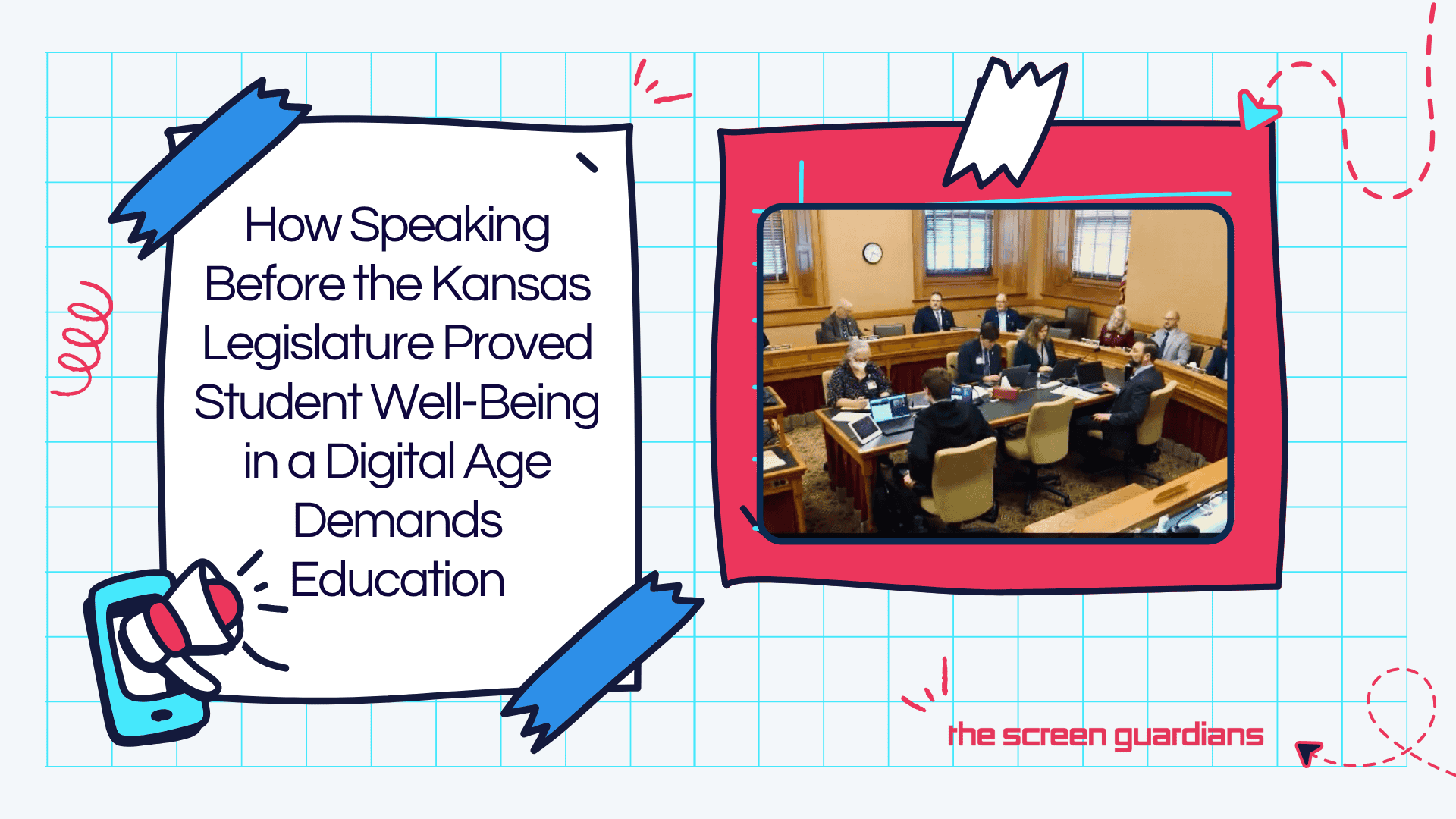
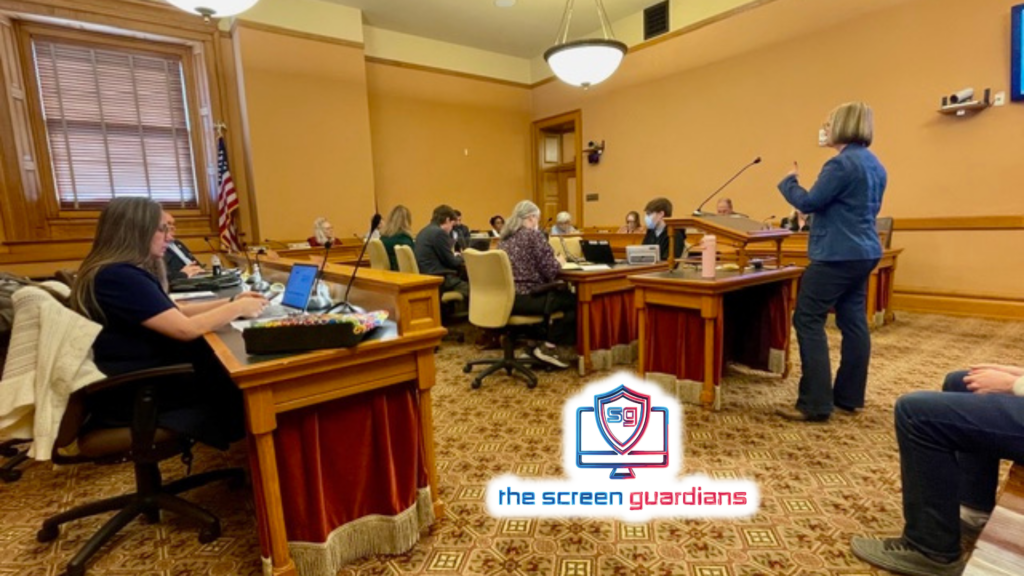
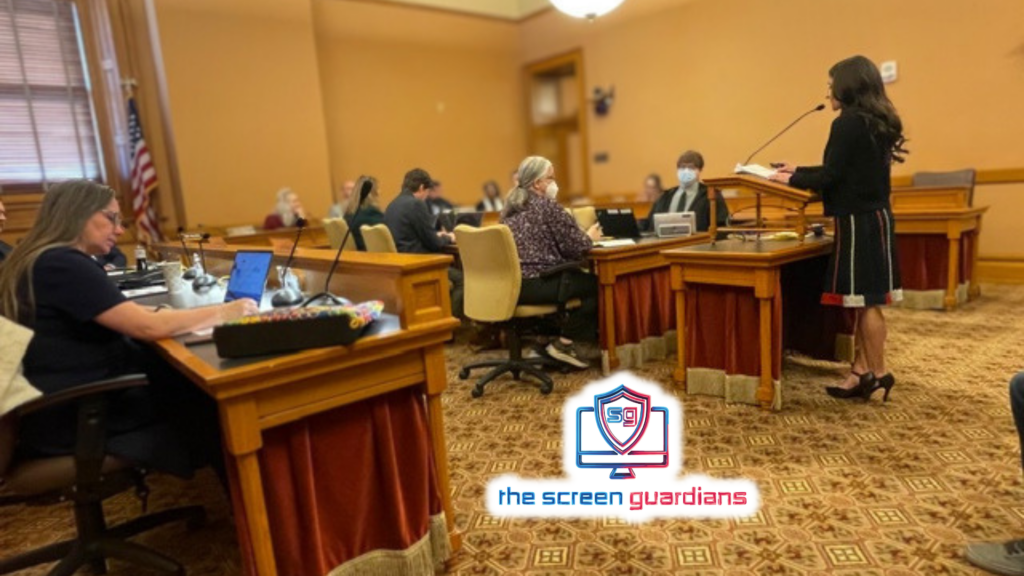
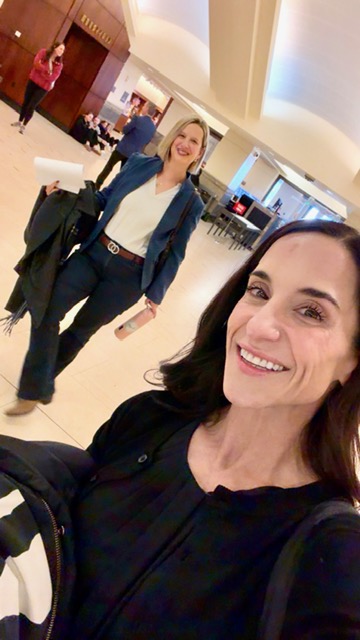
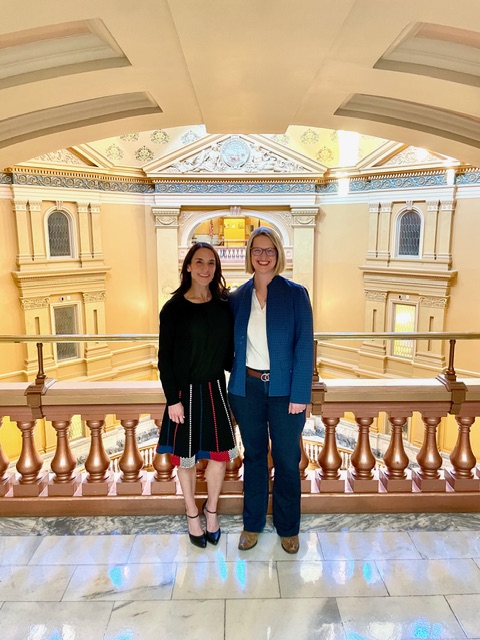
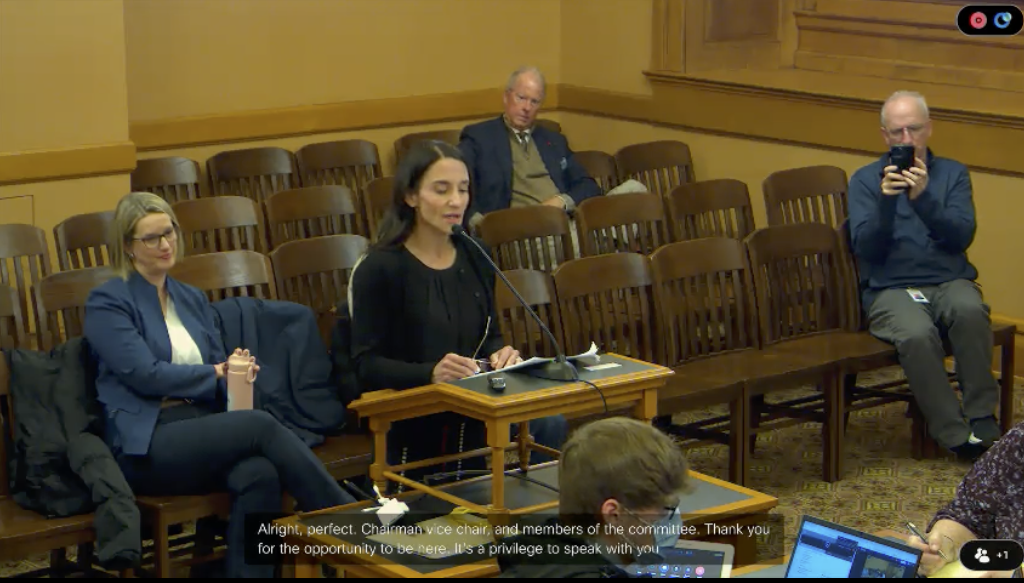
On Monday, March 16, that belief became reality. Susan Dunaway — our Chief Neuroscience Officer — and I had the privilege of speaking before the Kansas House Committee on K–12 Education Budget about one of the most urgent conversations of our time: student well-being in a digital age.
We weren’t there for a quick two-minute testimony. The chairman of the Senate Budget Committee invited us to present an informational session on how phone use and digital devices impact student well-being. We were given space to truly teach — around 40 minutes to present, followed by 20–25 minutes of thoughtful questions and discussion from legislators who genuinely wanted to understand the problem and the solution.
Watch the full presentation here.
Table of Contents
Why Kansas Needed to Hear This Now
The timing couldn’t have been more important. Both the Kansas House and Senate recently passed a bill to ban cell phones in schools from bell to bell, and the governor is expected to sign it. Another proposed bill would restrict younger students’ device access — potentially requiring teachers to log and police device use throughout the school day.
We absolutely support reducing unnecessary screen time and promoting analog learning. But here’s the gap we see: rules alone don’t teach wisdom.
Restriction without education doesn’t build the skills students need to navigate technology for the rest of their lives. And that gap — the space between enforcement and understanding — is exactly where our work lives.
With the committee’s permission, we expanded the conversation beyond phones to all digital devices. Because the problem is bigger than a single screen.
Student Well-Being in a Digital Age: What We Shared With Legislators
For more than a decade, we’ve watched student well-being decline. Attention is fractured. Anxiety and depression are rising. Classrooms are battling distraction at every turn. Filters, monitoring systems, and device bans try to manage the problem from the outside in — but students are smart. They find workarounds.
We shared what we’re seeing in schools every day:
- Students slipping old phones into pouches and keeping their real devices elsewhere
- Chromebooks used in guest mode or through VPNs that bypass school filters
- School devices going home and operating on unfiltered, unmonitored networks
- Teachers carrying the heavy burden of enforcing constantly shifting tech rules — on top of everything else they’re already managing
These approaches can be helpful. But they are not sufficient. They control access — they do not build understanding. And understanding is what leads to lasting change.
That’s what we told them. And that’s why programs like The Screen Guardians exist — not to replace policy, but to fill the gap that policy alone can never close.
How The Screen Guardians Is Already Making a Difference
The Screen Guardians is not a monitoring tool or a one-time assembly. It’s a structured, research-informed K–12 curriculum that teaches students how screens affect the brain, attention, emotions, sleep, relationships, and behavior. It gives teachers ready-to-use lessons that are easy to implement and consistent across classrooms. And it engages parents so home and school can work together — instead of in parallel.
We’re currently piloting The Screen Guardians in five schools. And the early results are deeply encouraging. Classrooms are calmer. Students are more reflective. The conversation has shifted from “How do we get them off their phones?” to “How do we help them understand what their phones are doing to them?”
That shift? That’s everything.
What Educators Are Saying
“The Screen Guardians program has been really positive so far. The students are settling into the lesson plans well, and we’re already seeing them engage more thoughtfully with the content. They’re beginning to understand not just the ‘what’ but the ‘why’ behind each lesson, which has sparked great conversations in class. From a teaching standpoint, the curriculum has been incredibly easy to implement.”
— Technology teacher, grades 6–8
“I really enjoyed teaching the first Screen Guardians lesson. The conversation with the 5th graders was incredible — they had so much to say!”
— Classroom teacher, grade 5
“Teachers and students are engaging in discussions about the brain. Students are asking thoughtful questions and thinking about things differently. This has never happened before.”
— Assistant principal
“I’m printing and running through the lessons I’ll be teaching next week and I just want you to know — the program is beautiful. It is so well thought out and detailed.”
— School counselor
What Parents Are Saying
“Your Screen Guardians program is an absolute godsend! I LOVE when Avery comes home so excited to tell me all she’s learning from it!”
— Emily, parent
“Sharky kept me at her bedside for 30 minutes telling me about her Screen Guardians lesson and bragging about how low her screen time is and how she makes good choices to read books instead of rot her brain. I love how they are organically coming to conclusions because they’re presented with the facts and making their own choices — instead of being told by parents not to and resisting because they don’t have the facts. Kids are smart.”
— Janelle, parent
“This is beyond what I imagined. You’ve hit every part and it gets to the root of it and starts teaching them early before they’re hooked like our teens are today. Every kid needs this!”
— JP, parent
What School Leaders Are Saying
“What caught my attention was that this isn’t a ‘one-shot wonder.’ It’s prescriptive enough that teachers don’t have to do a lot of extra work — it’s already done for them — and it includes a parent component. That whole package made me a believer.”
— Paul Larkin, Superintendent, USD 494
“We’re at the point where if we don’t do something about this, we’re going to lose these kids. It’s almost education malpractice if we don’t act.”
— Paul Larkin, Superintendent, USD 494
The Legislators’ Response
Many legislators thanked us afterward — not just for our time, but for including parents as essential partners in the solution. The committee chair even told us he planned to rewatch the session because there was so much important information packed into that hour.
That moment meant everything. Because this isn’t a partisan issue. It’s a human one.
Every parent, teacher, and lawmaker wants the same thing — to see children thriving, focused, curious, connected, and well. The digital crisis our kids are living through has the power to divide us. But it can also be the thing that brings us together.
Why Education — Not Just Policy — Must Lead the Way
Technology is not going away. We don’t want it to. We love what it makes possible. But we can no longer ignore what it is quietly costing our kids.
Our goal is not simply less screen time. Our goal is bigger than that:
- Less dependence and fewer daily battles
- Better focus and stronger academic outcomes
- Healthier mental and emotional well-being
- Safer, more connected school environments
We believe consistent education is the key. When schools, teachers, students, and parents share a common language and a shared understanding of how digital tools affect the brain and behavior, real change becomes possible. Technology stops being an invisible force and becomes something students can see clearly — and manage wisely.
According to the American Psychological Association’s health advisory on adolescent social media use, brain development during adolescence makes young people particularly vulnerable to the effects of social media and digital technology — which is exactly why education-first approaches matter so much during the school years.
This Conversation Has Started. Now It Needs to Reach Every Classroom.
Walking out of the Kansas Capitol that day, I felt deep gratitude — but also a renewed sense of urgency. This conversation has started in a legislative hearing room. Now it needs to reach every classroom, every teacher’s lounge, and every kitchen table where a parent is wondering what to do about screens.
Student well-being in a digital age isn’t a side issue. It’s the issue. And we don’t have to navigate it alone.
Not anti-technology. Pro-child. And just getting started.
If you’re a school leader ready to bring Screen Guardians to your district, learn more about our K–12 program here.
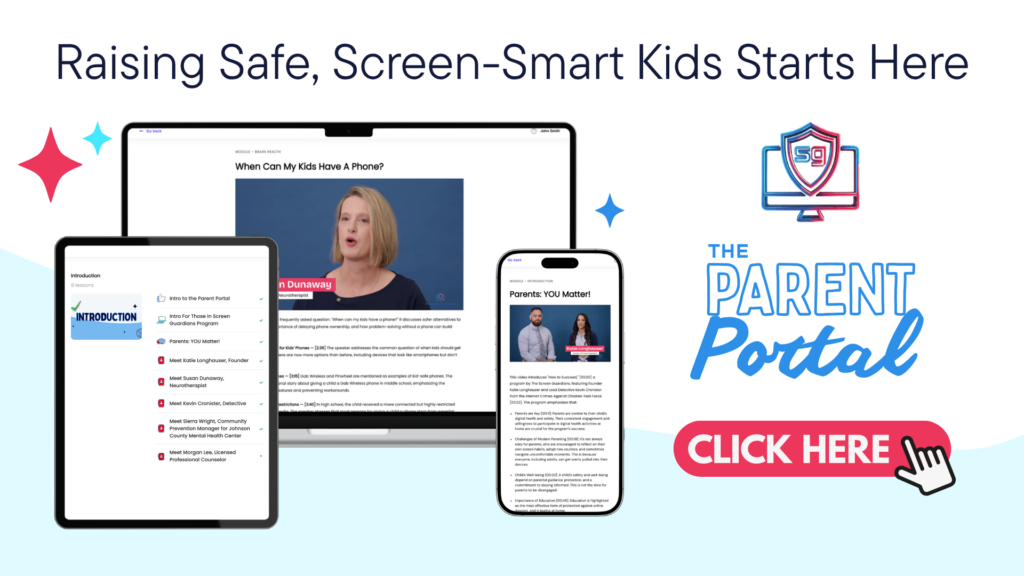
If you’re a parent who wants support right now, join the Parent Portal — a calm, resource-rich space for you to get steady when screen stress feels overwhelming.
Frequently Asked Questions
What did Screen Guardians present to the Kansas Legislature?
Screen Guardians founder Katie and Chief Neuroscience Officer Susan Dunaway presented a 40-minute informational session to the Kansas House Committee on K–12 Education Budget about student well-being in a digital age. They focused on how students’ digital environments are shaping their attention, learning, mental health, and safety — and why education-first programs are essential alongside policy changes like phone bans.
What is the Screen Guardians K–12 program?
The Screen Guardians is a structured, research-informed curriculum for grades K–12 that teaches students how technology affects their brains, attention, emotions, and behavior. It includes ready-to-use lessons for teachers, a parent companion guide, and is designed to be taught once a week in 30–40 minute sessions. The program is currently piloting in five schools with positive early results.
Why isn’t banning phones in schools enough to protect student well-being?
Phone bans can be a helpful first step, but restriction without education doesn’t build the skills students need to navigate technology for the rest of their lives. Students find workarounds — like using VPNs on Chromebooks, slipping old phones into pouches, or accessing unfiltered networks at home. Lasting change comes from teaching kids to understand how technology affects them, not just removing their access during school hours.
How can my school bring Screen Guardians to our district?
Schools can learn more about the Screen Guardians K–12 program and get in touch at thescreenguardians.com/k-12. The program is designed for easy implementation — teachers receive complete lesson plans, slides, videos, and activities ready to go. A parent companion component keeps families aligned with what students are learning in the classroom.
What results are schools seeing with the Screen Guardians program?
Pilot schools are reporting calmer classrooms, more reflective students, and thoughtful conversations about brain health and technology that never happened before. Teachers describe the curriculum as easy to implement, and parents are excited to see their children coming home eager to share what they’ve learned about healthy screen habits.